7.2.1 LLM 概览路线图:能力、成本、产品适配
LLM 概览不是模型名称清单,而是帮你判断大模型能做什么、代价是什么,以及什么时候该用 Prompt、RAG、Agent 或微调。
先看能力栈
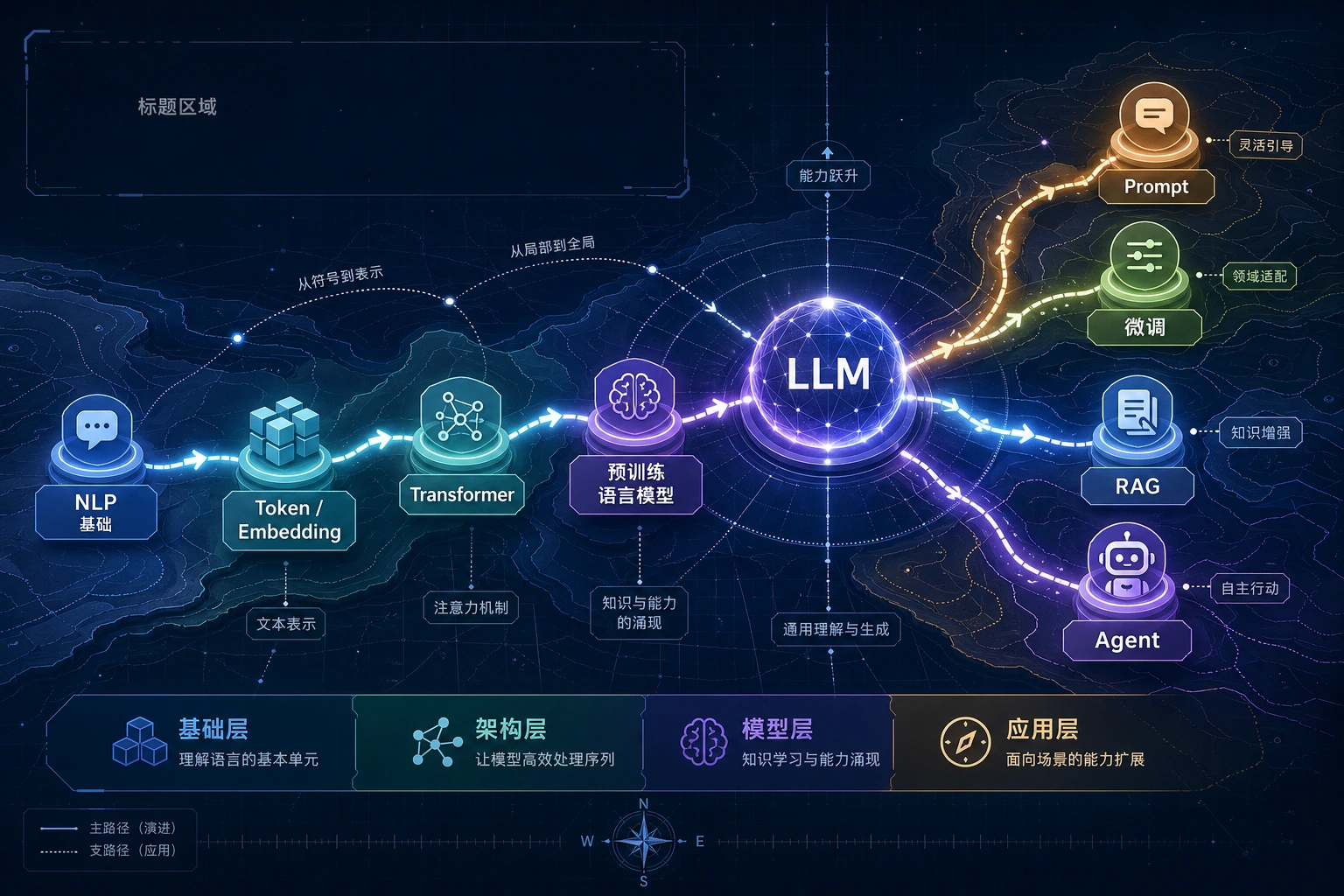
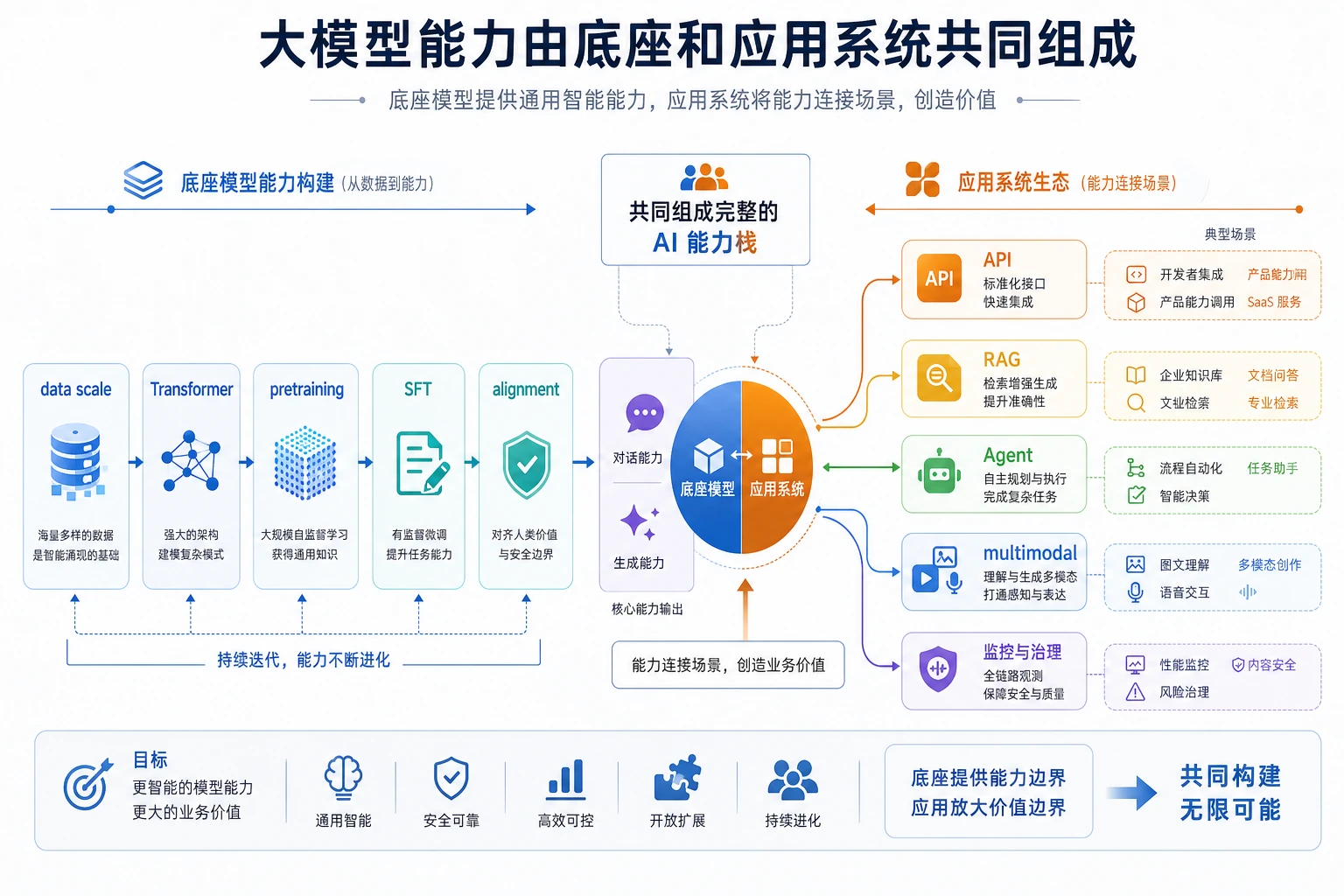
| 路线 | 适合什么时候 |
|---|---|
| prompt | 模型本身已经足够懂,任务简单 |
| RAG | 私有或会变化的知识需要引用 |
| Agent | 模型需要用工具或分步骤行动 |
| 微调 | 行为、风格、格式需要长期适配 |
跑一次路线判断
request = {
    "needs_private_docs": True,
    "needs_tool_action": False,
    "needs_repeated_style": False,
}

if request["needs_tool_action"]:
    route = "Agent"
elif request["needs_private_docs"]:
    route = "RAG"
elif request["needs_repeated_style"]:
    route = "fine-tuning"
else:
    route = "prompt"

print("recommended_route:", route)
预期输出:
recommended_route: RAG
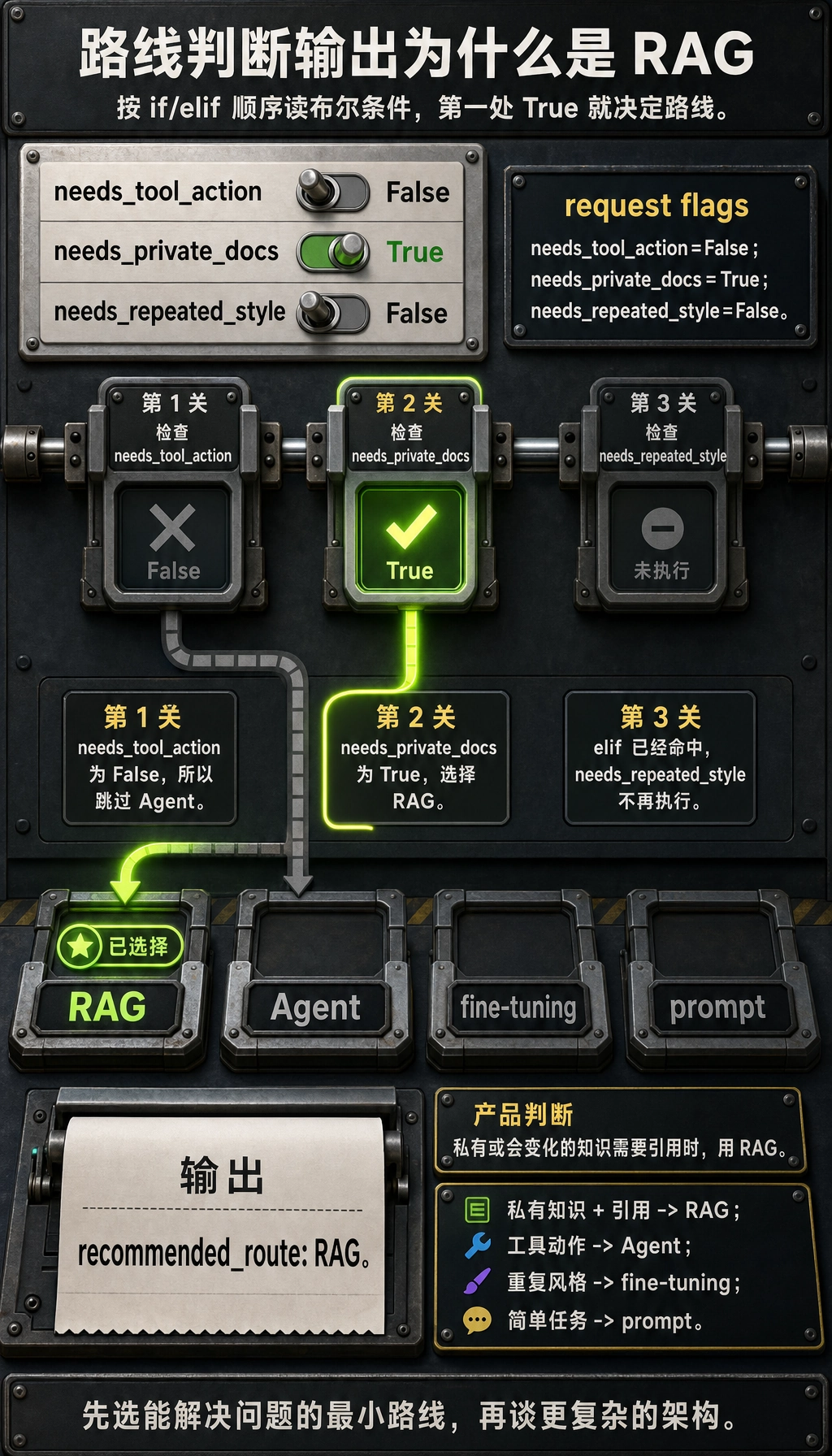
这不是完整架构决策,只是在训练习惯:选择能解决实际产品问题的最小路线。
按这个顺序学
| 顺序 | 阅读 | 留下什么 |
|---|---|---|
| 1 | 7.2.2 发展历史 | 为什么 scaling 和指令微调重要 |
| 2 | 7.2.3 核心概念 | context、token、temperature、延迟、成本 |
| 3 | 7.2.4 产业图谱 | 模型/供应商选择记录 |
| 4 | 7.2.5 LLM 调用工作台 | 一条请求/响应记录 |
通过标准
能从能力、上下文、成本、延迟、数据隐私和路线适配解释一次模型选择,就算通过。