7.2.1 LLM Overview Roadmap: Capability, Cost, Product Fit
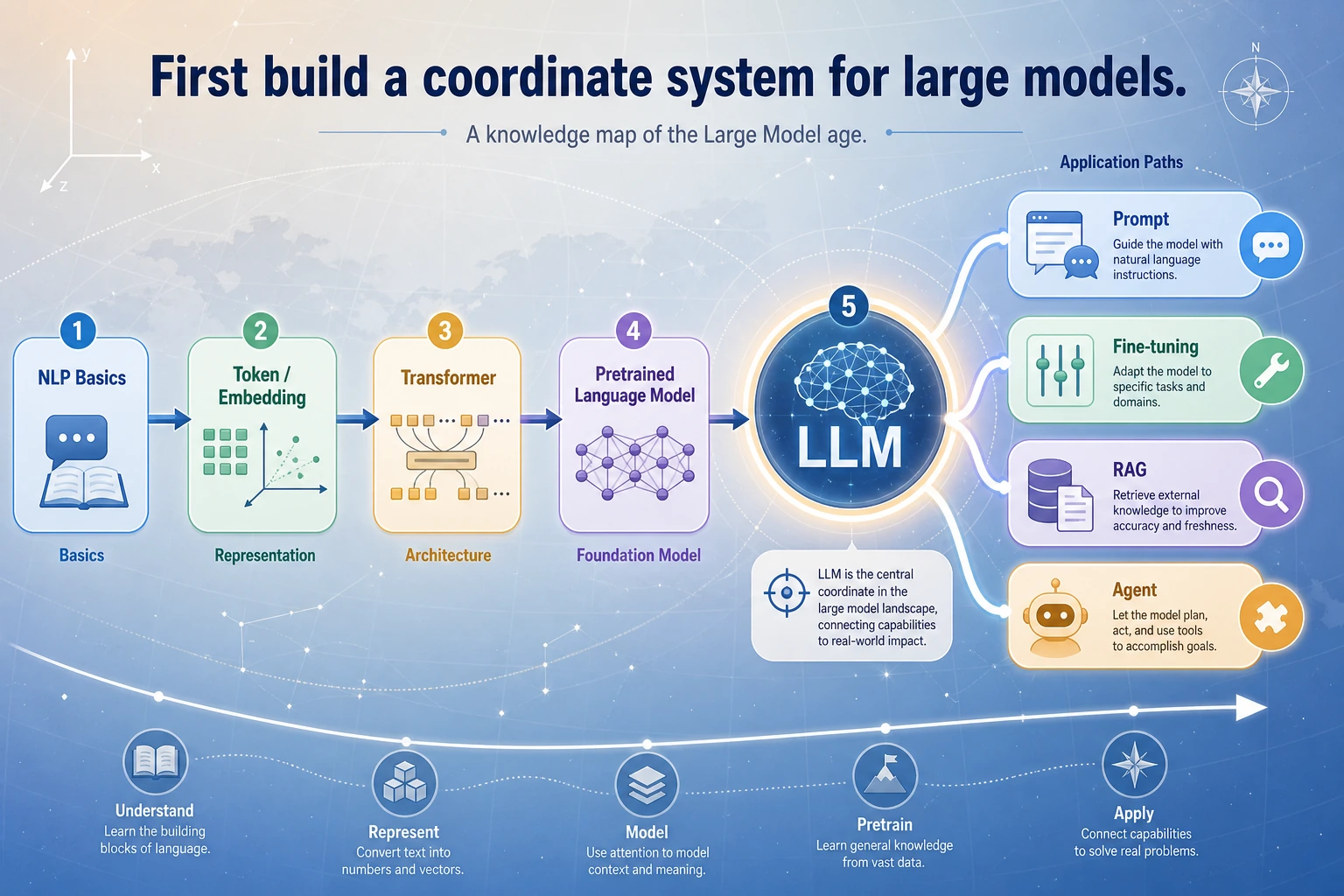
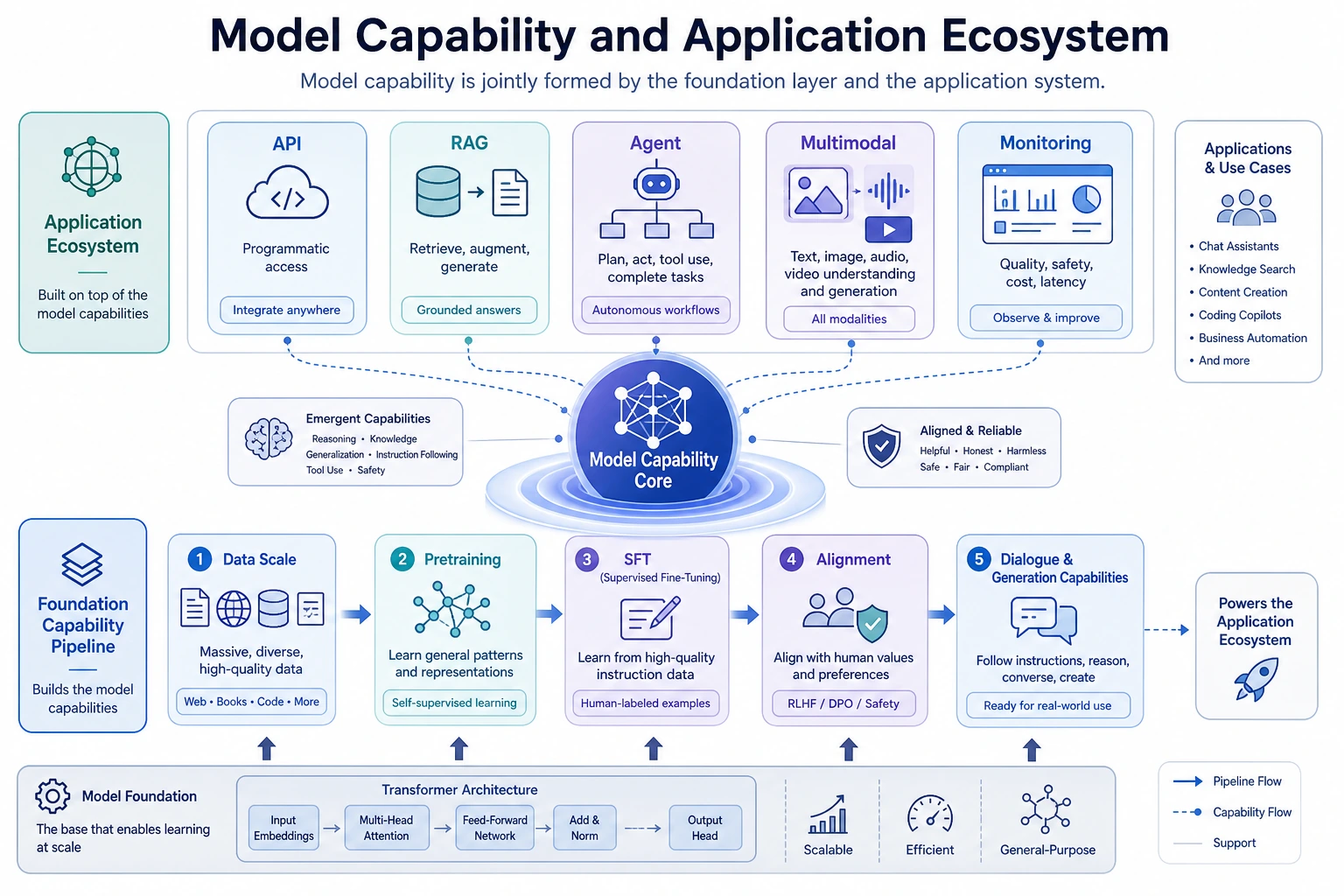
LLM overview is not a model-name list. It helps you decide what a large model can do, what it costs, and when prompting, RAG, Agent, or fine-tuning is a better route.
Look at the Capability Stack First
| Route | Use when... |
|---|---|
| prompt | the model already knows enough and task is simple |
| RAG | private or changing knowledge must be cited |
| Agent | the model must use tools or take steps |
| fine-tuning | behavior/style/format needs repeated adaptation |
Run One Route Decision
request = {
    "needs_private_docs": True,
    "needs_tool_action": False,
    "needs_repeated_style": False,
}

if request["needs_tool_action"]:
    route = "Agent"
elif request["needs_private_docs"]:
    route = "RAG"
elif request["needs_repeated_style"]:
    route = "fine-tuning"
else:
    route = "prompt"

print("recommended_route:", route)
Expected output:
recommended_route: RAG
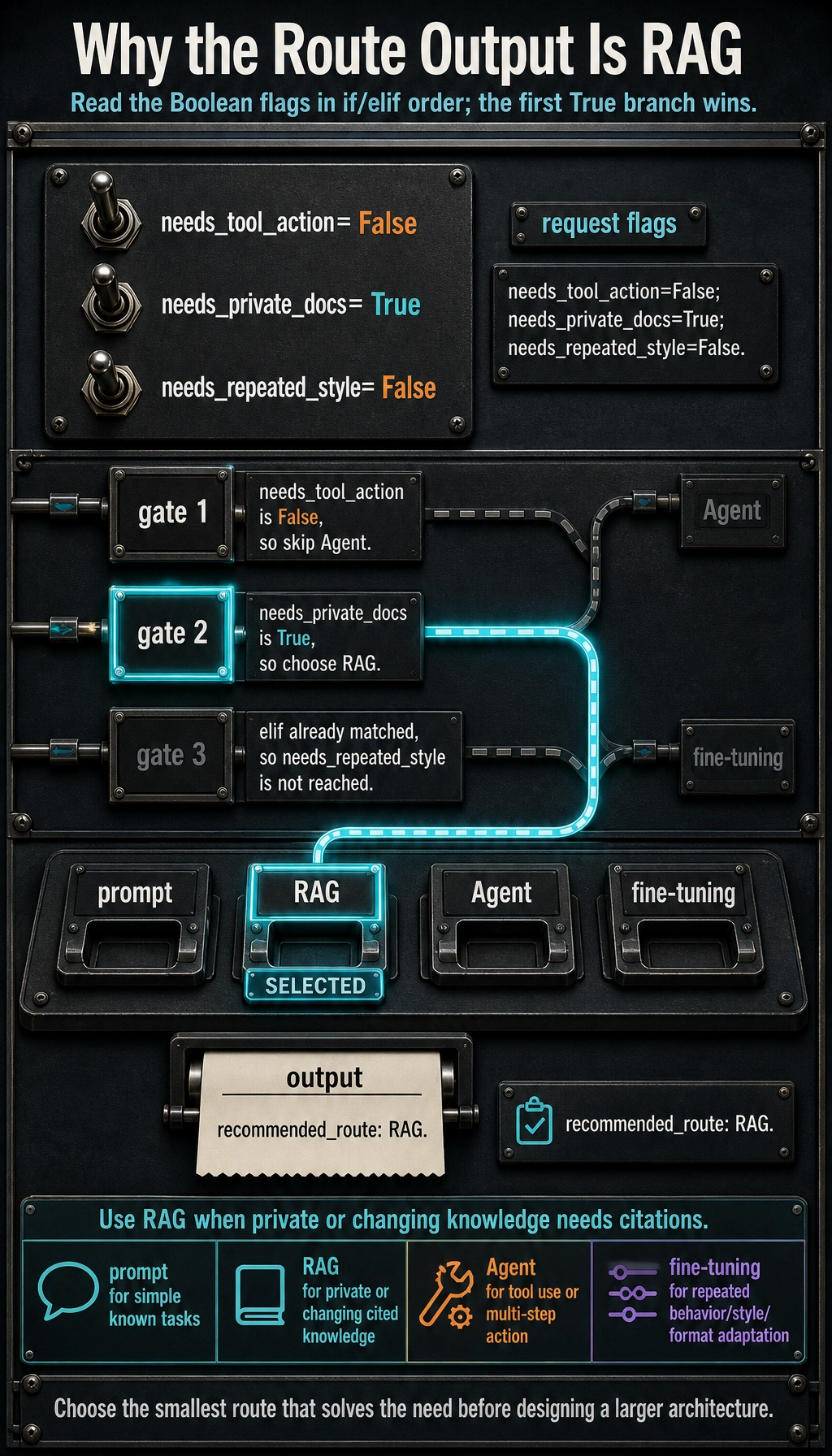
This is not a full architecture decision. It is the habit: choose the smallest route that solves the actual product need.
Learn in This Order
| Order | Read | What to keep |
|---|---|---|
| 1 | 7.2.2 Development History | why scaling and instruction tuning mattered |
| 2 | 7.2.3 Core Concepts | context, tokens, temperature, latency, cost |
| 3 | 7.2.4 Industry Landscape | model/provider selection notes |
| 4 | 7.2.5 LLM Call Workbench | one request/response record |
Pass Check
You pass this roadmap when you can explain one model choice in terms of capability, context, cost, latency, data privacy, and route fit.