E.A.1 C++ 编程基础
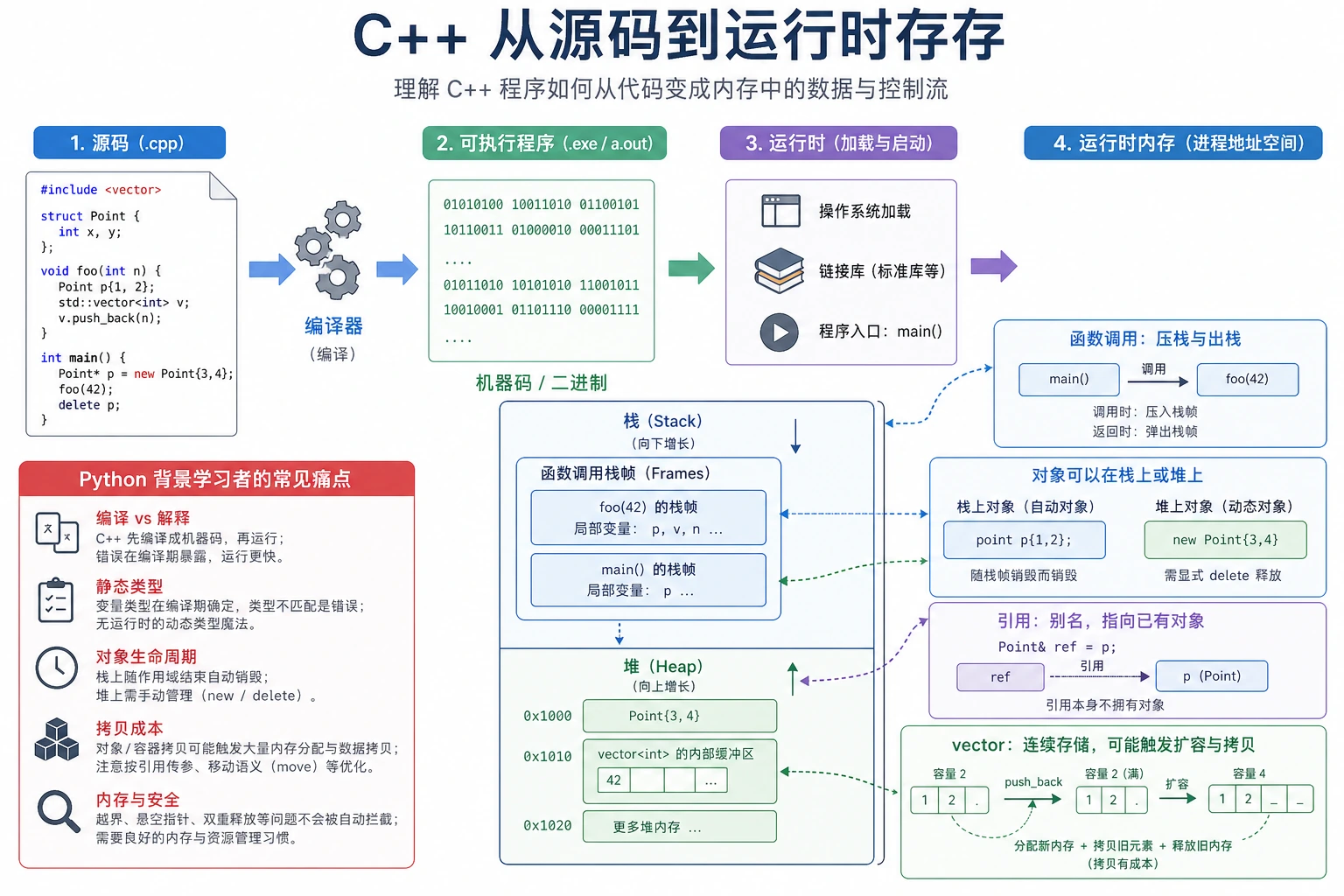
读部署代码前,你不需要先变成 C++ 专家。先掌握反复出现的小集合:类型、函数、std::vector、引用、编译和清晰输出。
运行最小推理风格程序
创建 demo.cpp:
#include <iostream>
#include <vector>

int main() {
    std::vector<float> logits = {1.2f, 0.3f, 2.1f};
    int best_index = 0;

    for (int i = 1; i < static_cast<int>(logits.size()); ++i) {
        if (logits[i] > logits[best_index]) {
            best_index = i;
        }
    }

    std::cout << "best_class=" << best_index << "\n";
    std::cout << "score=" << logits[best_index] << "\n";
    return 0;
}
运行:
c++ -std=c++17 demo.cpp -o demo
./demo
预期输出:
best_class=2
score=2.1
重点看什么
| C++ 点 | 部署含义 |
|---|---|
std::vector<float> | 一个简单的类 tensor 容器 |
明确类型 float / int | 编译器必须知道数据和值类型 |
static_cast<int>(...) | 明确转换类型,而不是赌它能跑 |
| 先编译再运行 | 部署通常产出二进制,而不只是脚本 |
| 打印结果 | 每个部署测试都需要可复现证据 |
动手改一下
把 logits 改成:
std::vector<float> logits = {3.4f, 0.3f, 2.1f};
再次运行,预期 best_class 变成 0。
通过检查
你能编译文件、修改输入值、解释为什么类别改变,并说清楚 std::vector<float> 在推理程序里代表什么,就算通过。