9.1.1 Agent 基礎ロードマップ:Goal、State、Action
Agent はモデル名ではありません。Goal に向かって、model、tools、state、memory、feedback をまとめる system pattern です。
まず single-Agent loop を見る
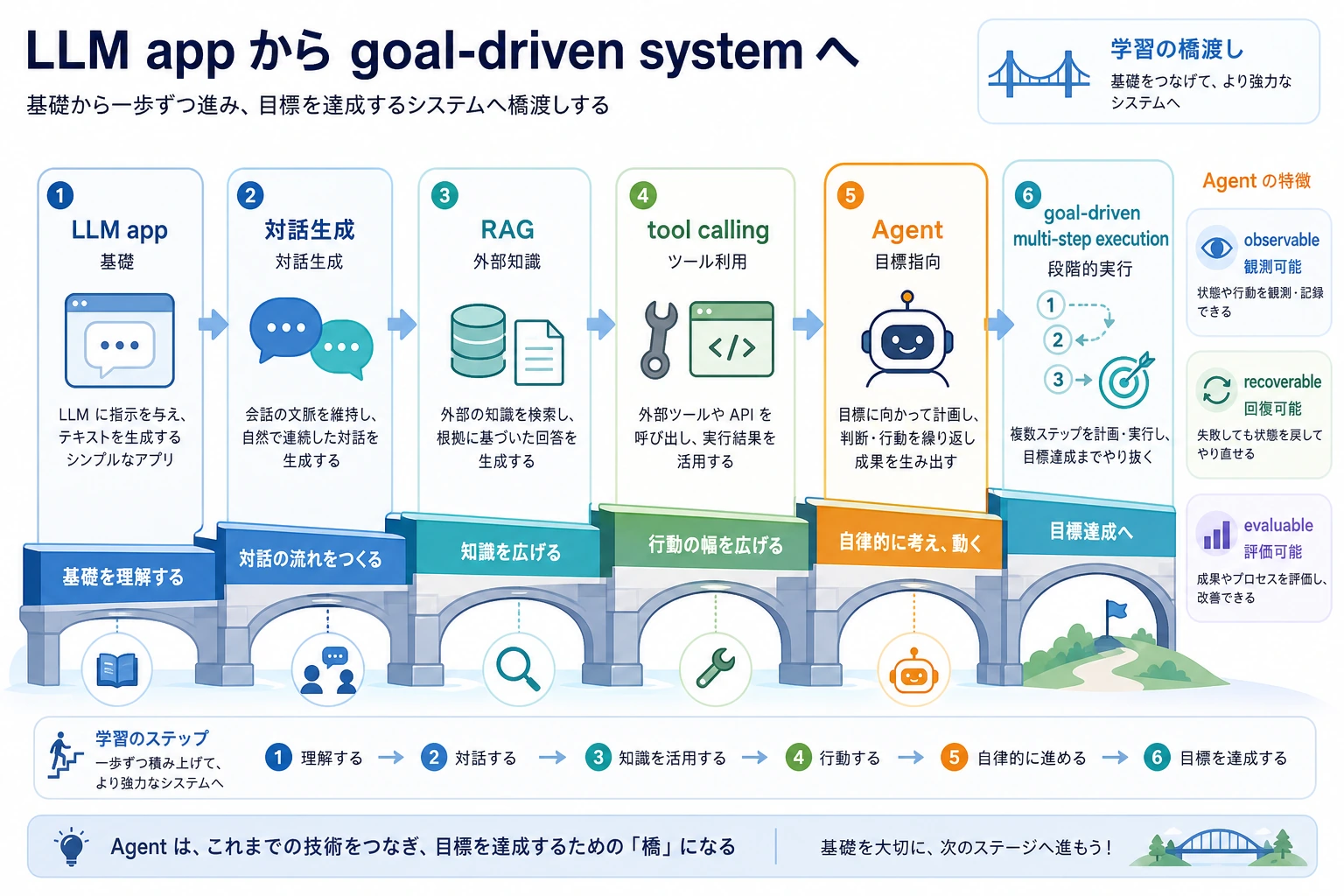
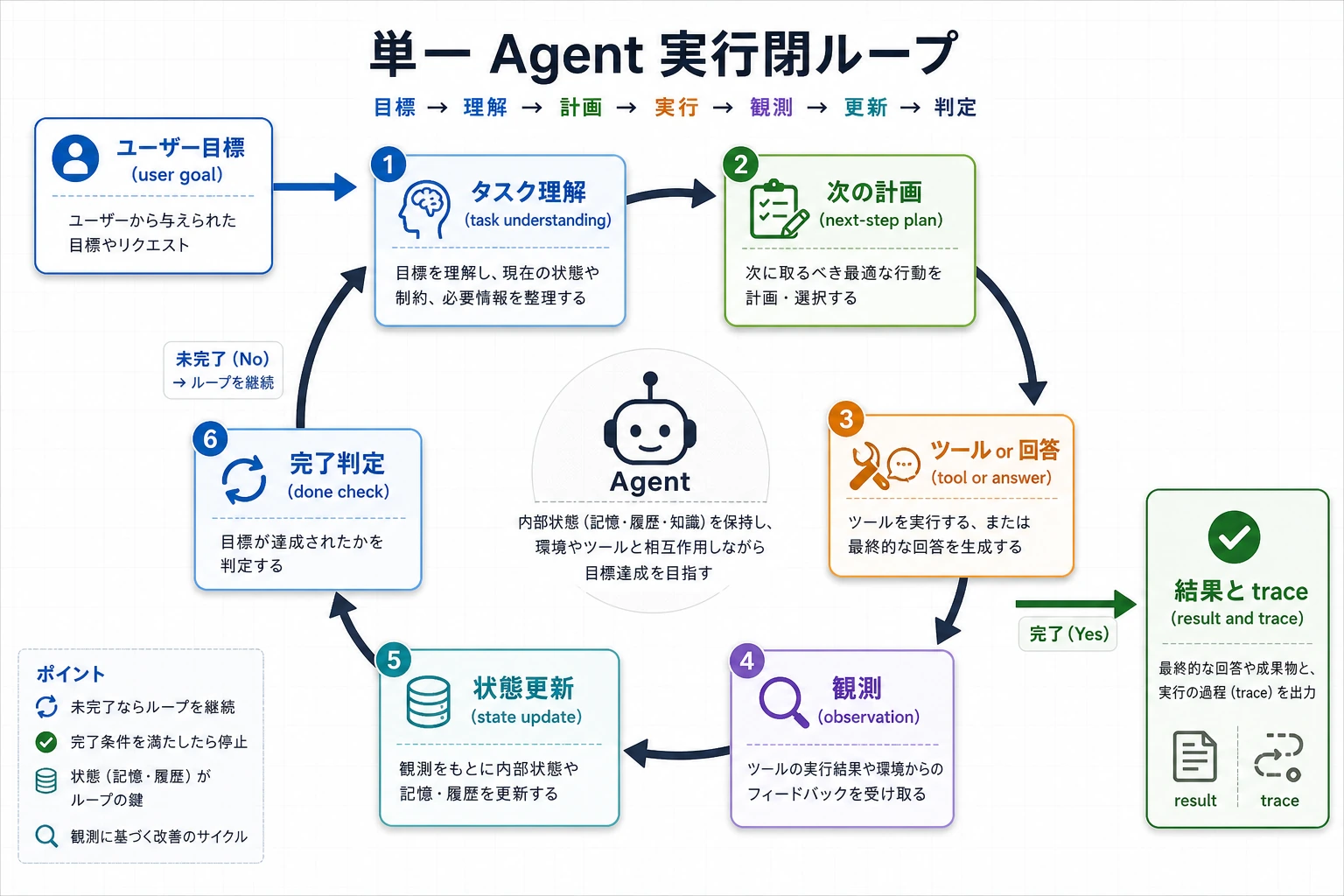
普通の chatbot は 1 回答えます。workflow は固定手順を進みます。Agent は plan、act、observe、state update を行い、goal が終わっていなければ続けます。
小さな Agent state loop を動かす
このスクリプトはまだモデルを呼びません。Agent を debug できるようにする最小 state を示します。
goal = "summarize RAG citation rules"
state = {"steps": [], "done": False}

for action in ["plan", "search_docs", "summarize"]:
    state["steps"].append(action)

state["done"] = True

print("goal:", goal)
print("steps:", " -> ".join(state["steps"]))
print("done:", state["done"])
出力:
goal: summarize RAG citation rules
steps: plan -> search_docs -> summarize
done: True
demo が goal、state、action、observation、stop condition を示せないなら、まず LLM app と呼び、Agent とは呼ばないほうが正確です。
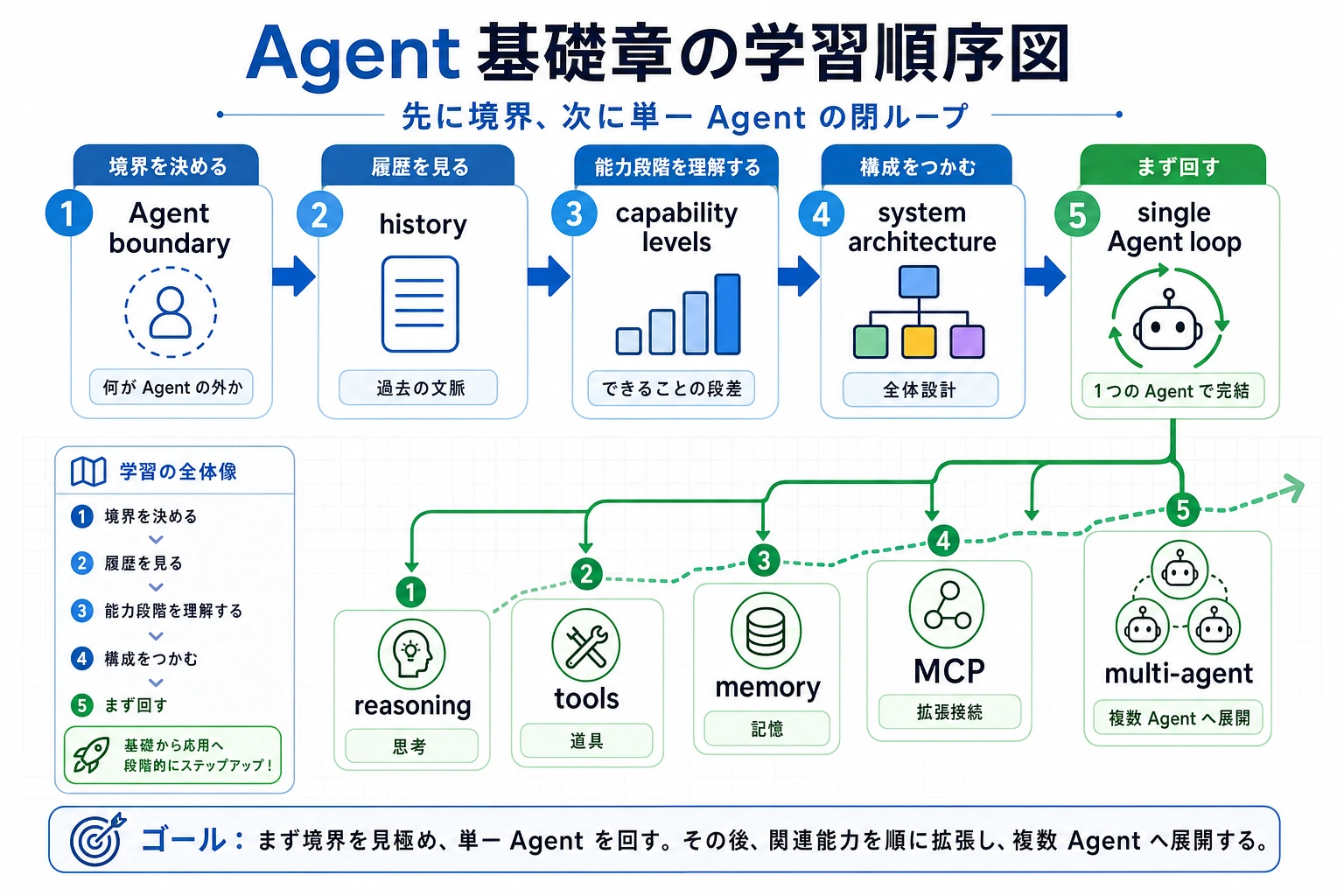
この順番で学ぶ
| 手順 | 読む内容 | 実践アウトプット |
|---|---|---|
| 1 | Agent とは何か | chatbot、workflow、RAG app、Agent を比較する |
| 2 | 発展史 | なぜ LLM が Agent systems を再び注目させたか理解する |
| 3 | 能力レベル | answer、retrieve、tool use、plan、memory、collaboration を同じ ladder に置く |
| 4 | System architecture | goal、state、planner、tools、memory、observation、executor を描く |
| 5 | RL から Agent への突破 | action、reward、feedback、planning をつなげる |
合格ライン
single-Agent loop を描き、multi-Agent collaboration の前に single-Agent stability が必要な理由を説明できれば、この章は合格です。
出口ミニプロジェクトは research assistant Agent trace です:1 つの goal、1 つの plan、少なくとも 1 つの tool decision、1 つの observation、1 つの stop condition、1 つの final answer を残します。