9.1.1 Agent Basics Roadmap: Goal, State, Action
An Agent is not a model name. It is a system pattern that uses a model, tools, state, memory, and feedback to keep working toward a goal.
See the Single-Agent Loop First
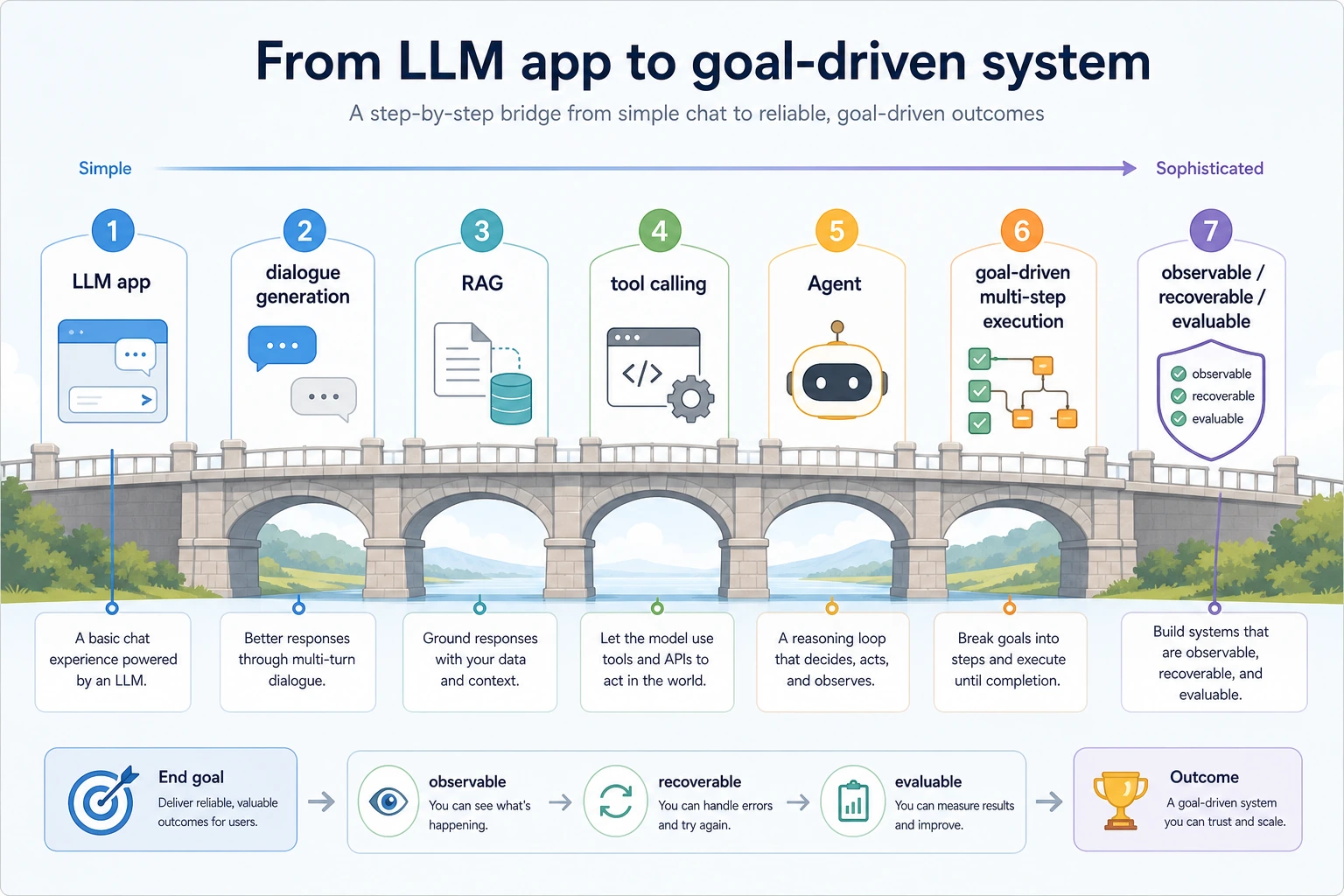
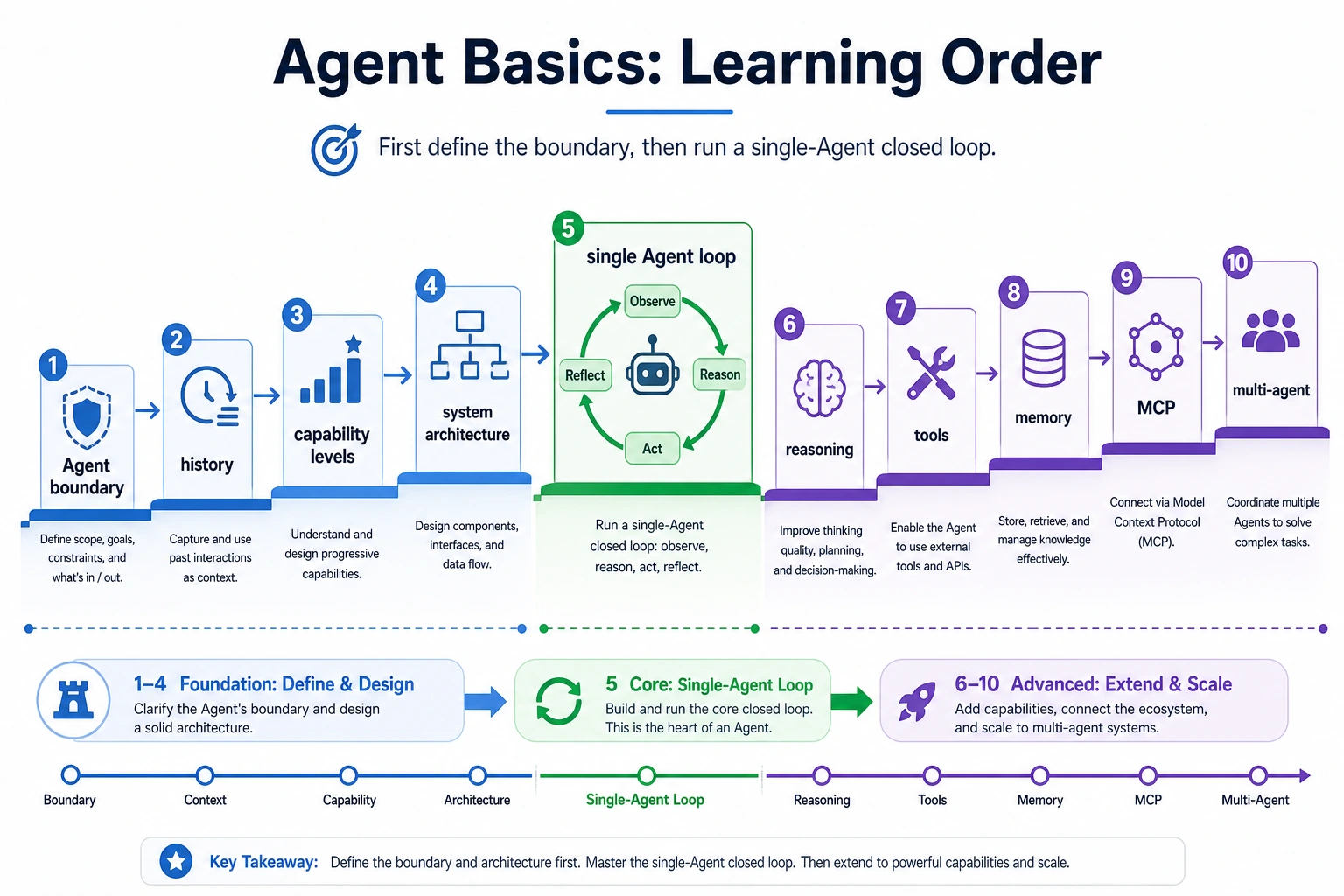
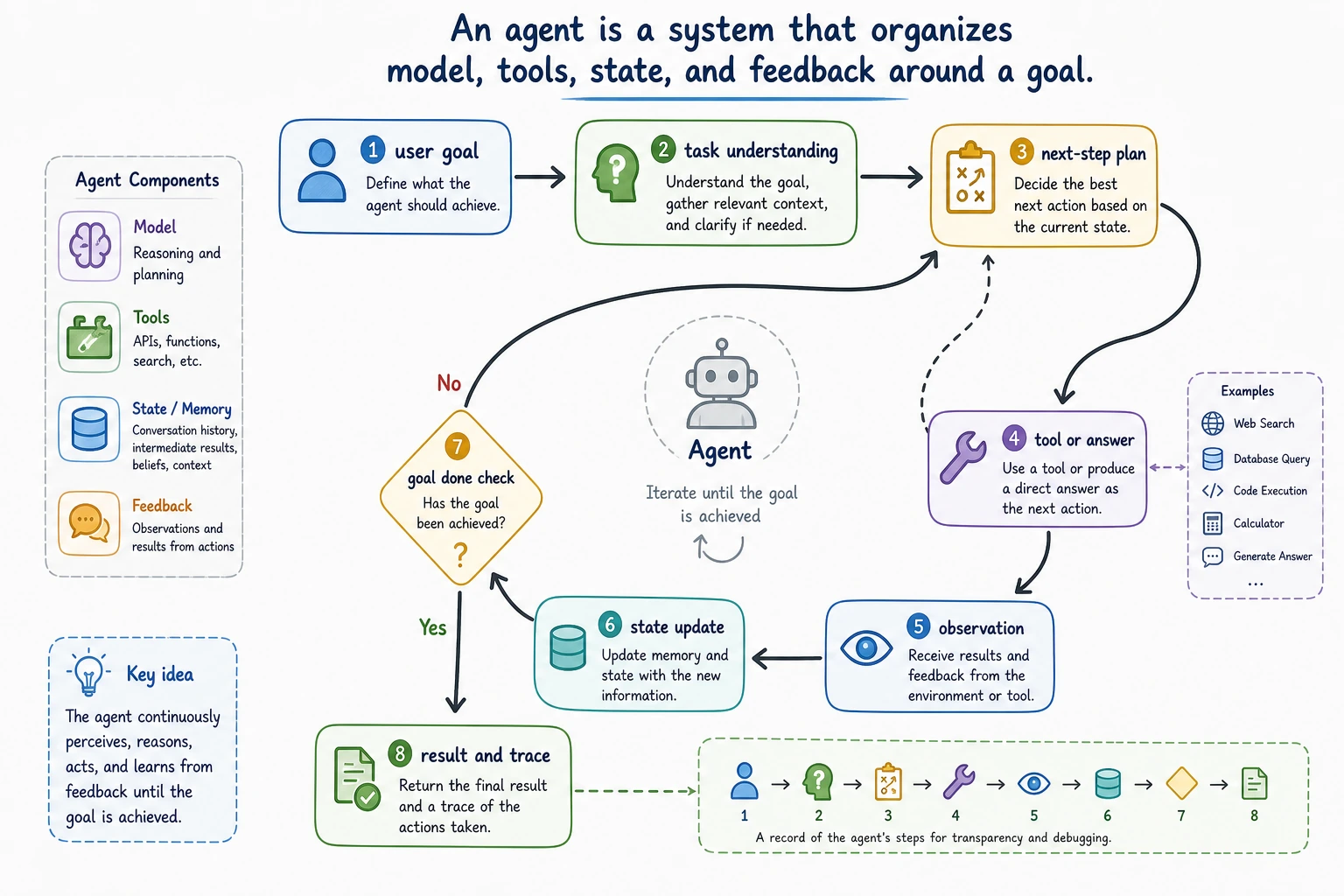
A normal chatbot answers once. A workflow follows fixed steps. An Agent can plan, act, observe, update state, and continue when the goal is not done.
Run a Tiny Agent State Loop
This script does not call a model yet. It shows the minimum state you need before an Agent can be debugged.
goal = "summarize RAG citation rules"
state = {"steps": [], "done": False}

for action in ["plan", "search_docs", "summarize"]:
    state["steps"].append(action)

state["done"] = True

print("goal:", goal)
print("steps:", " -> ".join(state["steps"]))
print("done:", state["done"])
Expected output:
goal: summarize RAG citation rules
steps: plan -> search_docs -> summarize
done: True
If a demo cannot show goal, state, action, observation, and stop condition, call it an LLM app first, not an Agent.
Learn in This Order
| Step | Read | Practice Output |
|---|---|---|
| 1 | What is an Agent | Compare chatbot, workflow, RAG app, and Agent |
| 2 | Development history | Understand why LLMs revived Agent systems |
| 3 | Capability levels | Place answer, retrieve, tool use, plan, memory, collaboration on one ladder |
| 4 | System architecture | Draw goal, state, planner, tools, memory, observation, executor |
| 5 | RL to Agent breakthroughs | Connect action, reward, feedback, and planning |
Pass Check
You pass this chapter when you can draw one single-Agent loop and explain why single-Agent stability comes before multi-Agent collaboration.
The exit mini project is a research assistant Agent trace: one goal, one plan, at least one tool decision, one observation, one stop condition, and one final answer.