9.7.1 Multi-Agent ロードマップ:Roles、Messages、Owner
Multi-Agent は役割分担の仕組みであり、複数の chatbot を並べることではありません。role separation、parallel work、cross-checking、specialist collaboration の利益が coordination cost を上回るときだけ使います。
まず collaboration cost を見る
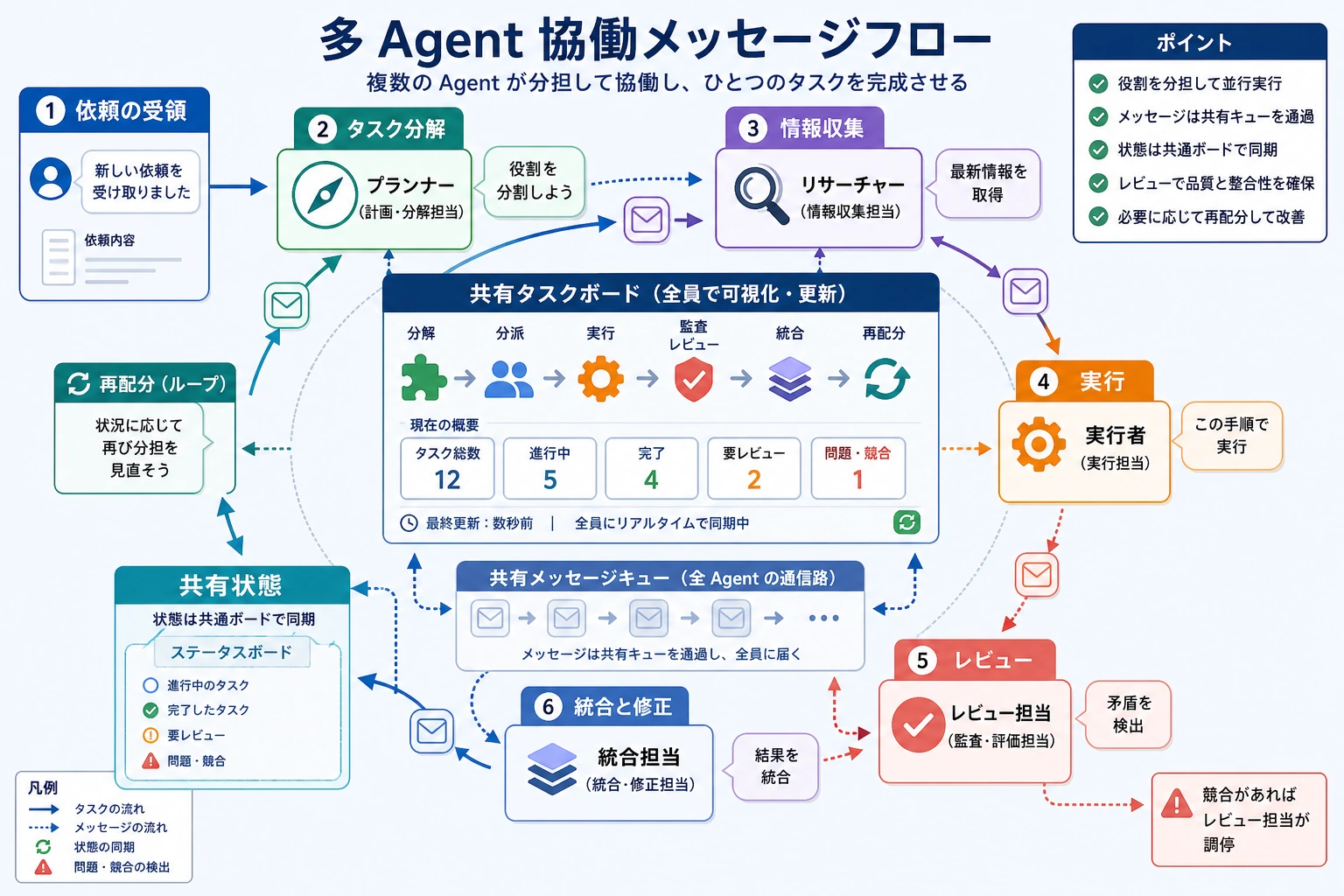
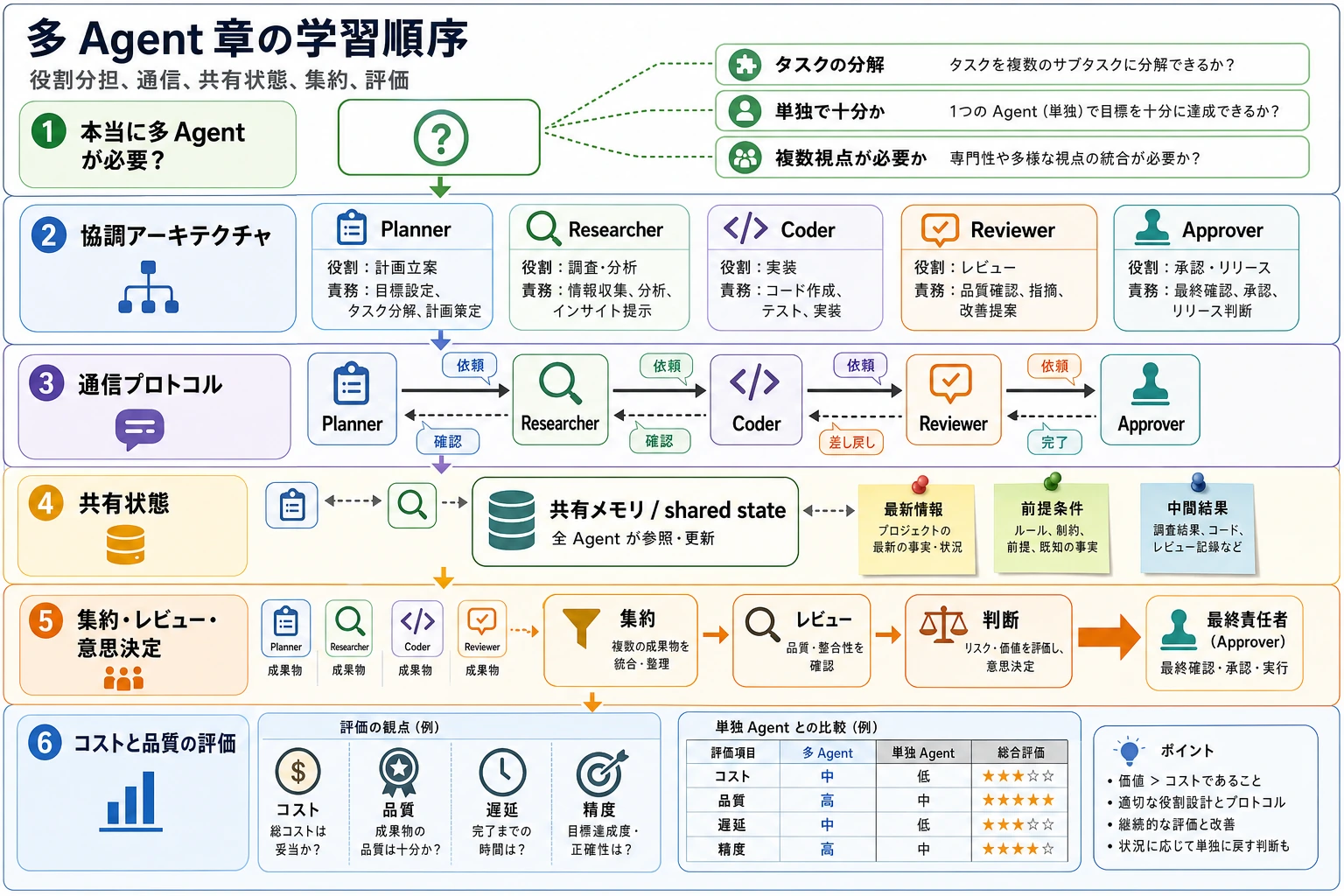
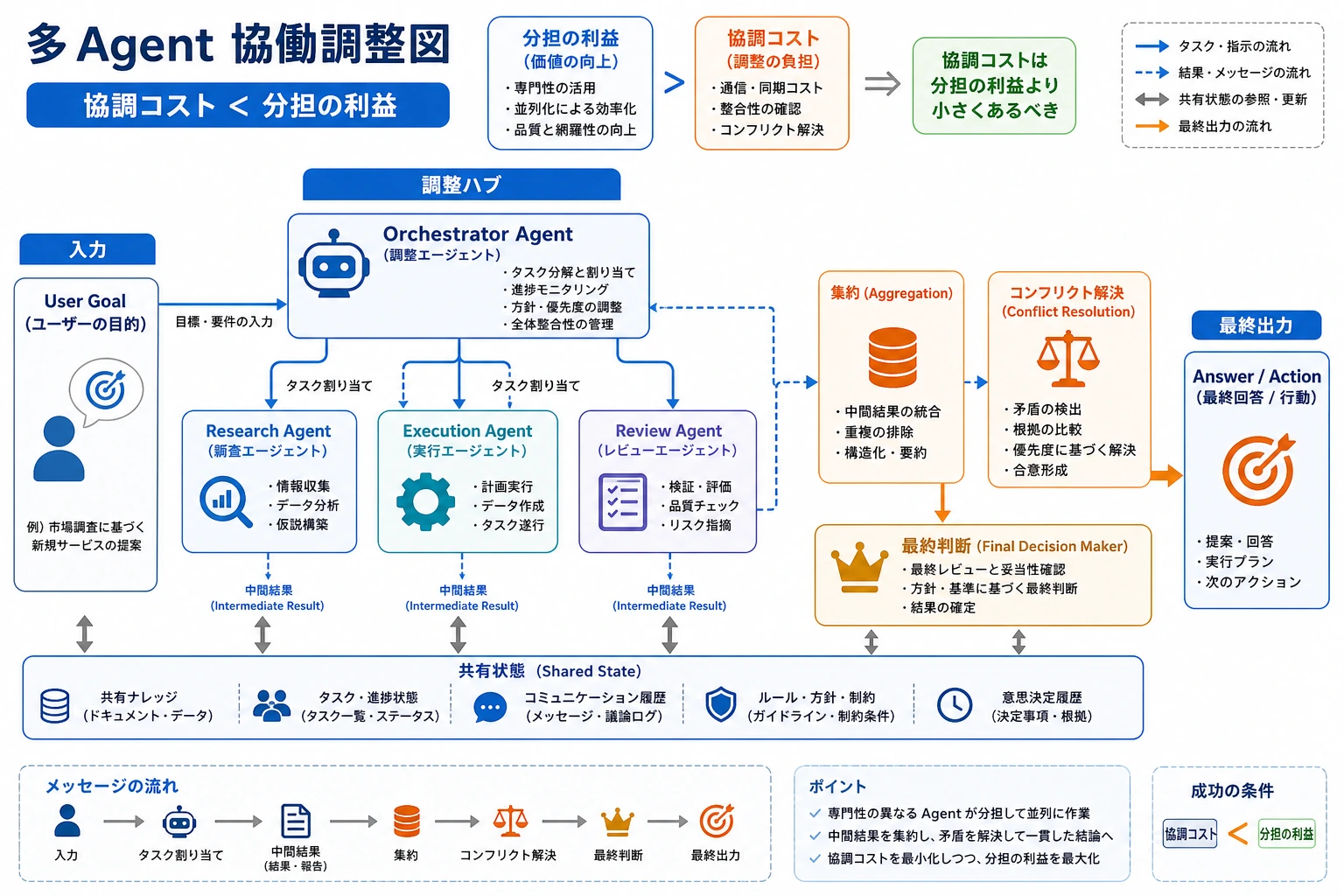
重要な問いは、分業の利益が messages、repeated context、conflicts、final merge のコストを上回るかです。
Role boundary check を動かす
各 role には 1 つの責務と 1 つの output が必要です。final decision の owner を 1 人残します。
agents = {
    "researcher": "collect evidence",
    "editor": "rewrite content",
    "reviewer": "check beginner clarity",
}

final_owner = "reviewer"

print("agent_count:", len(agents))
for name, job in agents.items():
    print(f"{name}: {job}")
print("final_owner:", final_owner)
出力:
agent_count: 3
researcher: collect evidence
editor: rewrite content
reviewer: check beginner clarity
final_owner: reviewer
2 つの roles が同じ output を出すなら merge します。final owner がいないと system は drift します。
この順番で学ぶ
| 手順 | 読む内容 | 実践アウトプット |
|---|---|---|
| 1 | Multi-Agent を使う時 | single Agent のほうがよい時を書く |
| 2 | Common patterns | supervisor-executor、pipeline、debate、expert committee を比較する |
| 3 | Communication | message format、shared state、handoff rule を定義する |
| 4 | Coordination | owner、queue、conflict rule、aggregation を追跡する |
| 5 | Practice and risks | cost、loops、duplicated work、role overreach を測る |
合格ライン
2〜3 Agents の demo が traceable inputs、outputs、handoffs、final ownership を持ち、single Agent より良い理由を説明できれば、この章は合格です。