9.7.1 Multi-Agent Roadmap: Roles, Messages, Owner
Multi-Agent is a division-of-labor mechanism, not several chatbots talking. Use it only when role separation, parallel work, cross-checking, or specialist collaboration is worth the coordination cost.
See the Collaboration Cost First
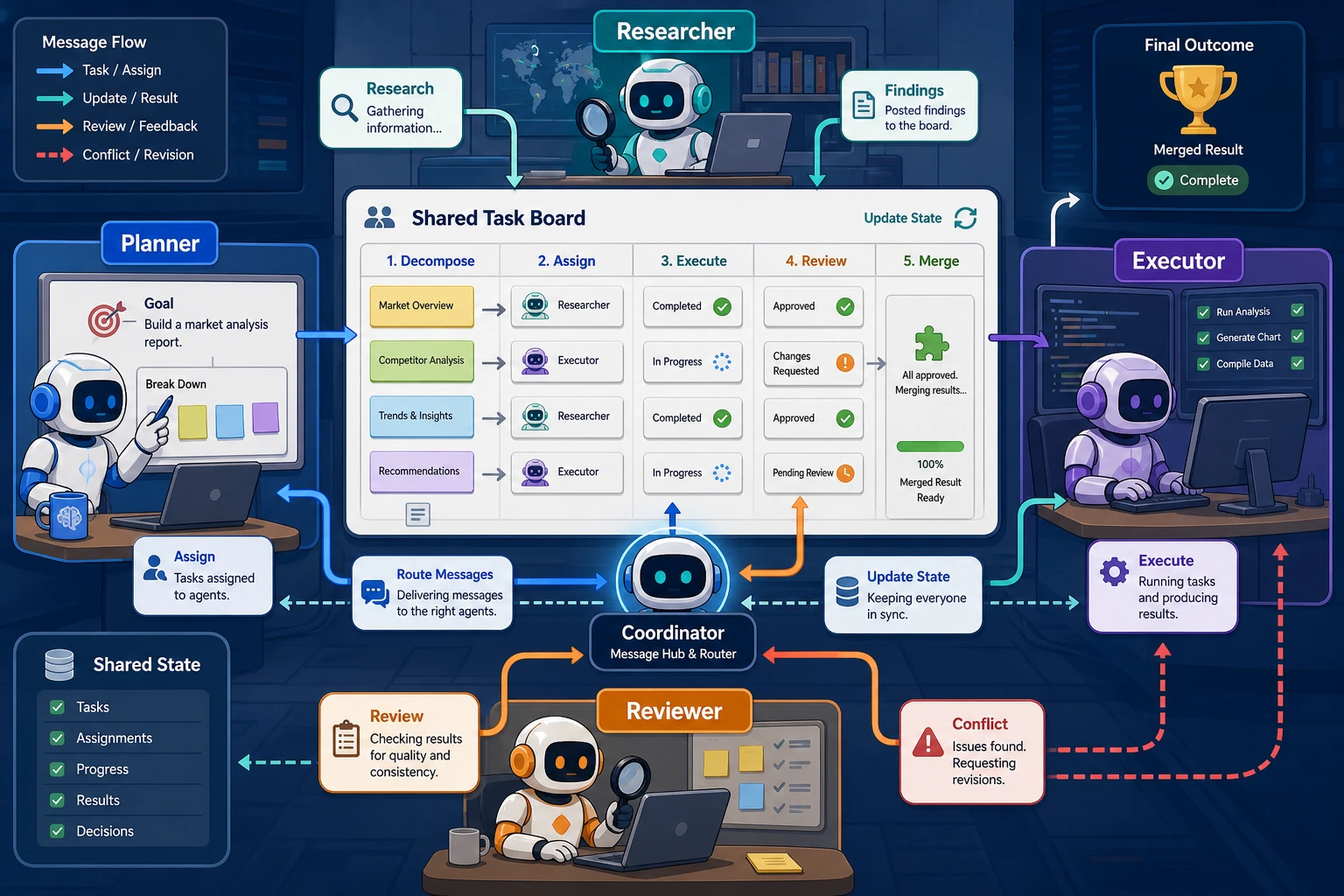
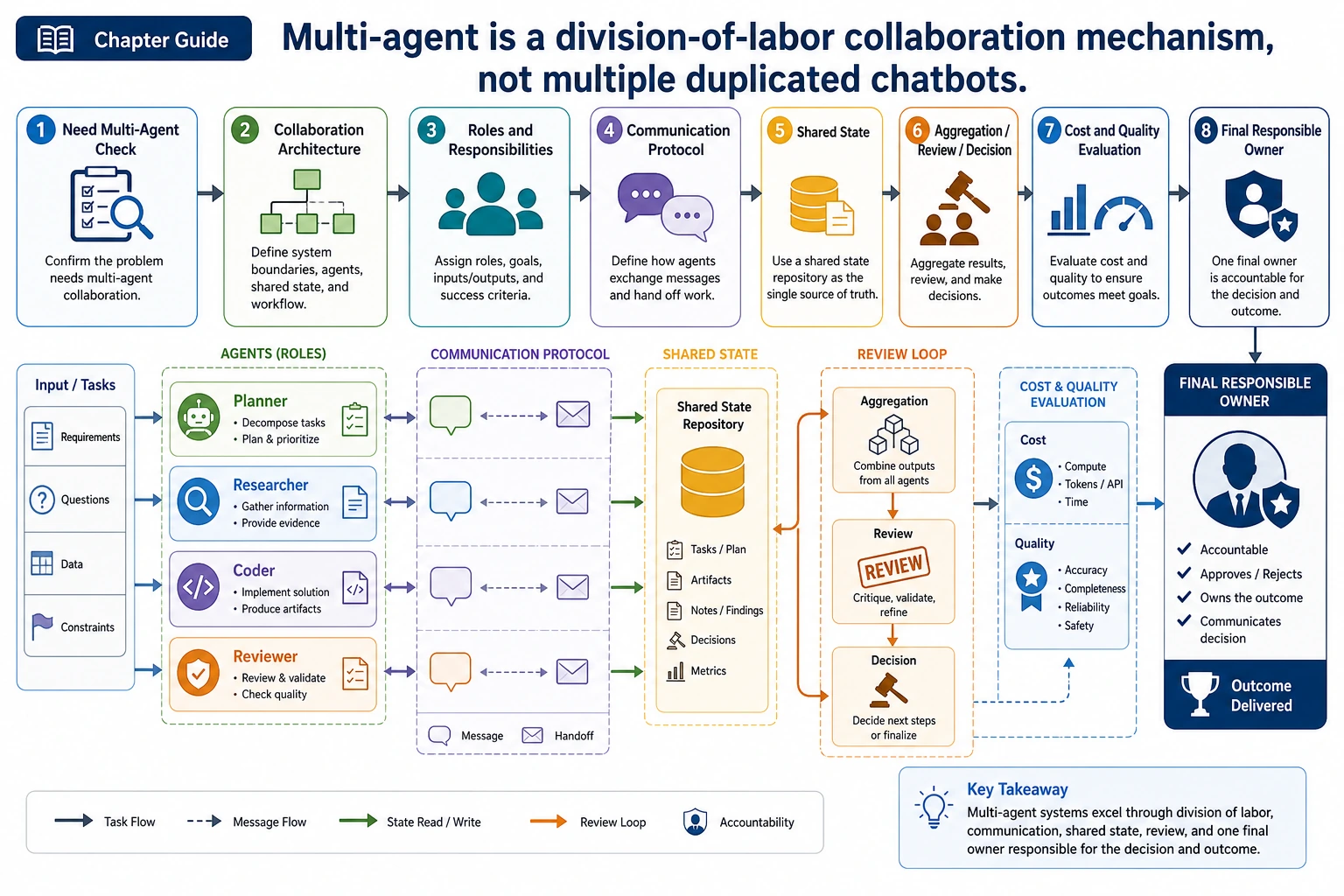
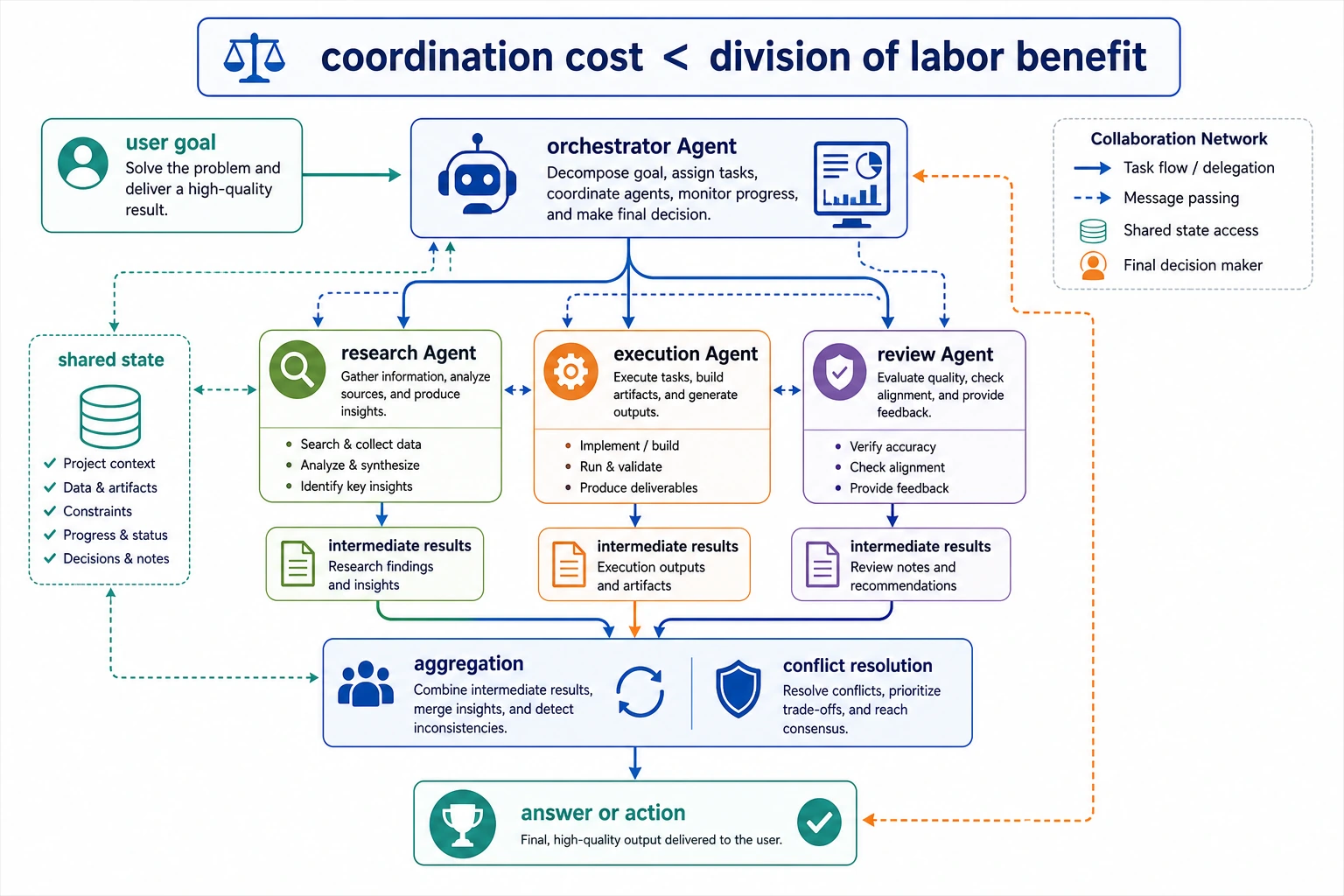
The key question is: does the benefit of splitting work exceed the cost of messages, repeated context, conflicts, and final merging?
Run a Role Boundary Check
Every role needs one responsibility and one output. Keep one owner for the final decision.
agents = {
    "researcher": "collect evidence",
    "editor": "rewrite content",
    "reviewer": "check beginner clarity",
}

final_owner = "reviewer"

print("agent_count:", len(agents))
for name, job in agents.items():
    print(f"{name}: {job}")
print("final_owner:", final_owner)
Expected output:
agent_count: 3
researcher: collect evidence
editor: rewrite content
reviewer: check beginner clarity
final_owner: reviewer
If two roles produce the same output, merge them. If nobody owns the final decision, the system will drift.
Learn in This Order
| Step | Read | Practice Output |
|---|---|---|
| 1 | When to use Multi-Agent | Write when a single Agent is better |
| 2 | Common patterns | Compare supervisor-executor, pipeline, debate, expert committee |
| 3 | Communication | Define message format, shared state, and handoff rule |
| 4 | Coordination | Track owner, queue, conflict rule, and aggregation |
| 5 | Practice and risks | Measure cost, loops, duplicated work, and role overreach |
Pass Check
You pass this chapter when a 2 to 3 Agent demo has traceable inputs, outputs, handoffs, final ownership, and a clear reason why it beats a single Agent.