A.6 Frequently Asked Questions
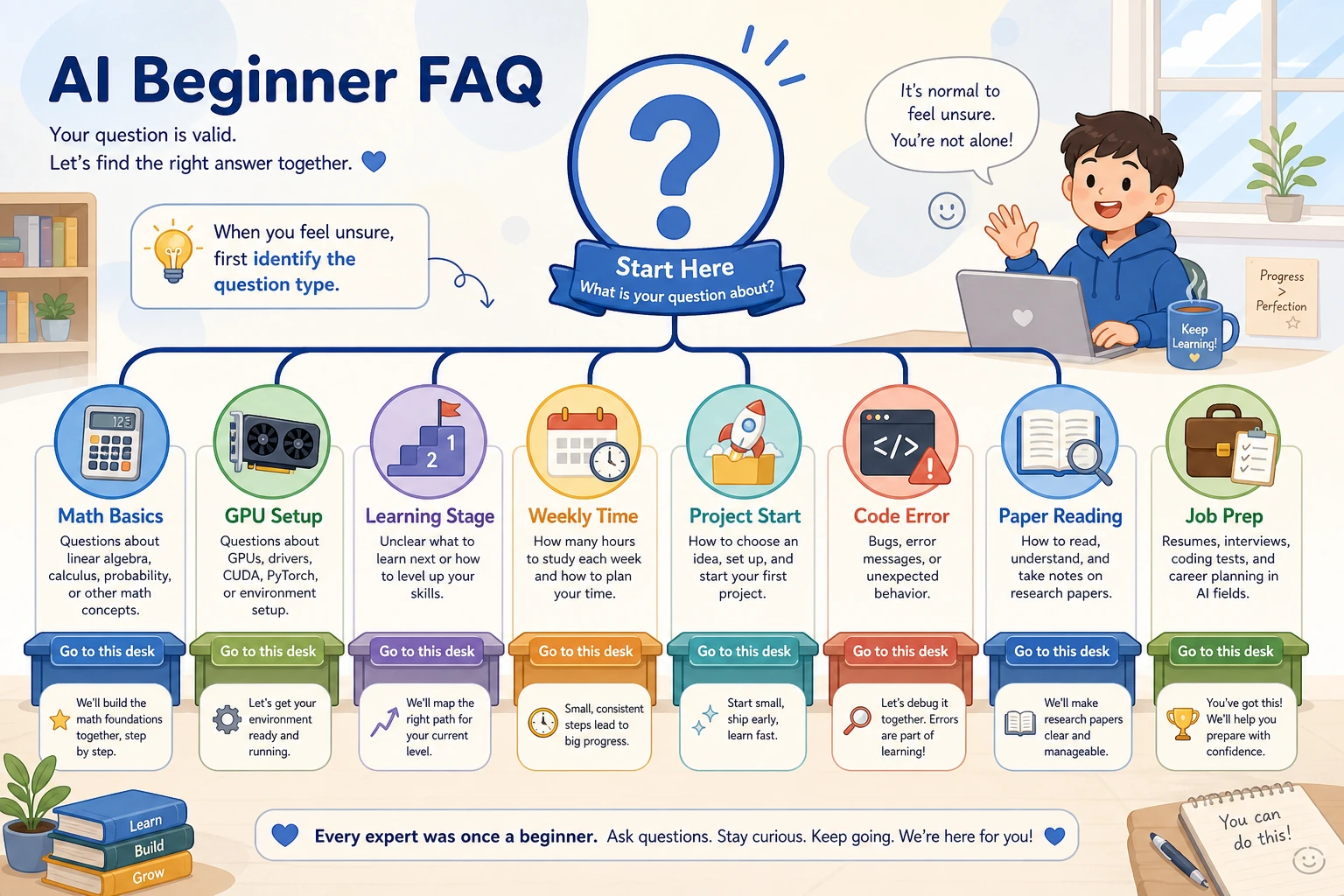
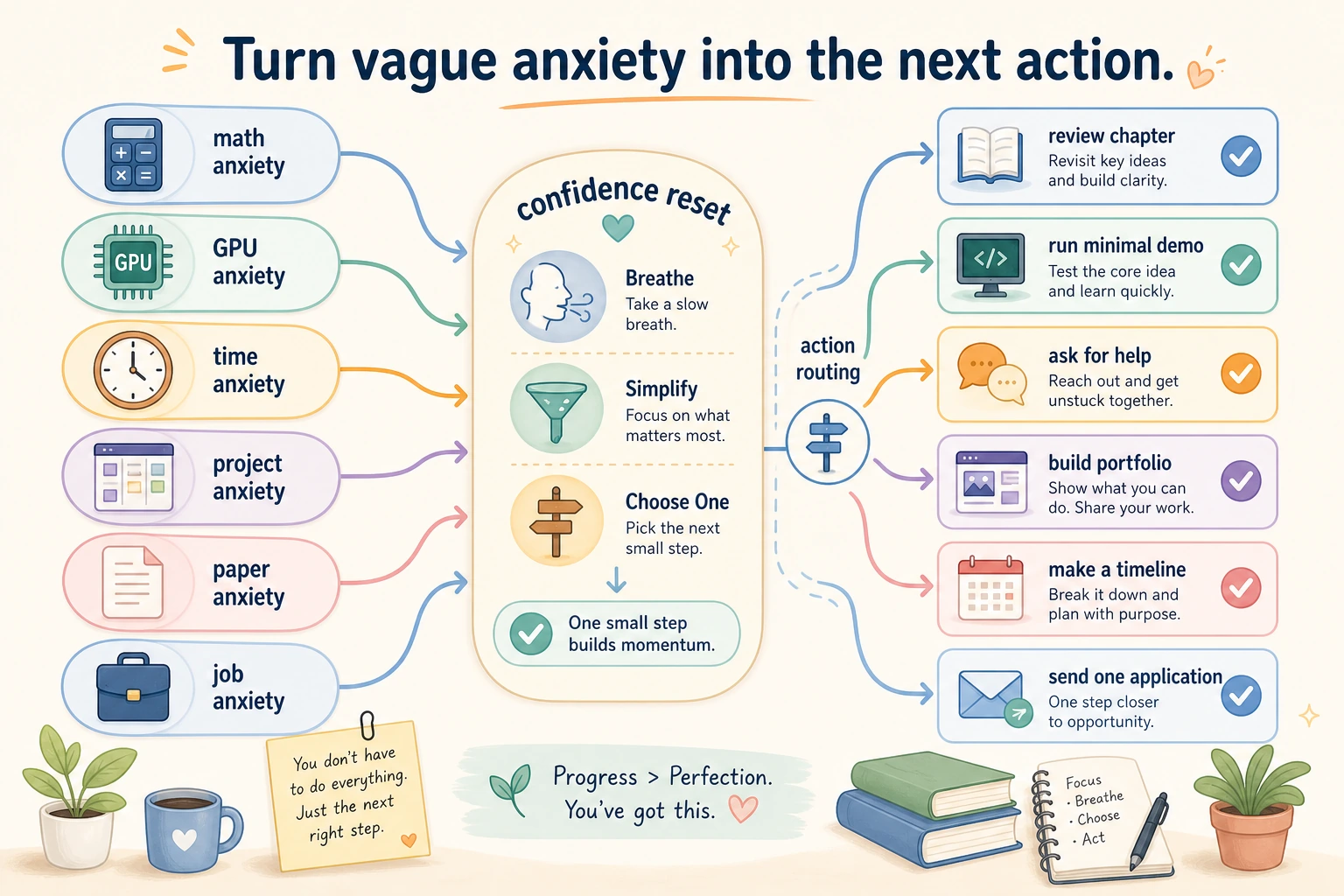
Use this page when the question is emotional or vague. Convert it into a next action.
Fast answers
| Question | Short answer | Next action |
|---|---|---|
| I am weak at math. Can I learn AI? | Yes. Learn math through code and projects. | Run Python, NumPy, and small ML examples first. |
| Do I need a GPU? | Not at the beginning. | Use CPU/API first; rent cloud GPU only when training needs it. |
| Do I need every chapter? | Keep the main path, then choose direction modules. | Finish foundations, then pick RAG/Agent/CV/NLP/multimodal focus. |
| How many hours per week? | Consistency beats bursts. | 4-10 hours/week is enough if sustained. |
| When should I do projects? | As early as possible, but keep them small. | Build one input -> one process -> one output. |
| I cannot read papers. Is that fatal? | No. Papers are later supplements. | Read tutorial, code, then paper. |
| When can I job hunt? | When you can explain 2-3 projects clearly. | Prepare README, metrics, failure cases, and interview story. |
Minimum learning path for application builders
Tools -> Python -> Data -> Deep Learning Basics -> LLM Principles -> RAG -> Agent
If you want stronger model foundations:
Tools -> Python -> Data -> Math -> ML -> Deep Learning -> LLM -> RAG / Agent
Weekly rhythm
| Weekly time | Good rhythm |
|---|---|
| 4-6 hours | 2 study sessions + 1 coding session |
| 7-10 hours | 3 study sessions + 2 coding sessions |
| 12-18 hours | Add one project/review block, avoid burnout |
Confidence reset
When you feel slow, ask:
- Can I understand more code than last month?
- Can I modify examples instead of only copying?
- Can I explain one concept more clearly?
If yes, you are progressing.
Three abilities to strengthen first
- Python and debugging.
- Data processing and visualization.
- Minimal closed-loop project thinking.
Many beginners think they need a more advanced model. Often they first need clearer inputs, outputs, checks, and explanations.