5.6.1 ML Projects Roadmap: Baseline, Evidence, Improvement
This chapter is the exit point of Chapter 5. It proves you can turn a data problem into a modeling workflow that can be evaluated, explained, and shown in a portfolio.
Look at the Project Loop First
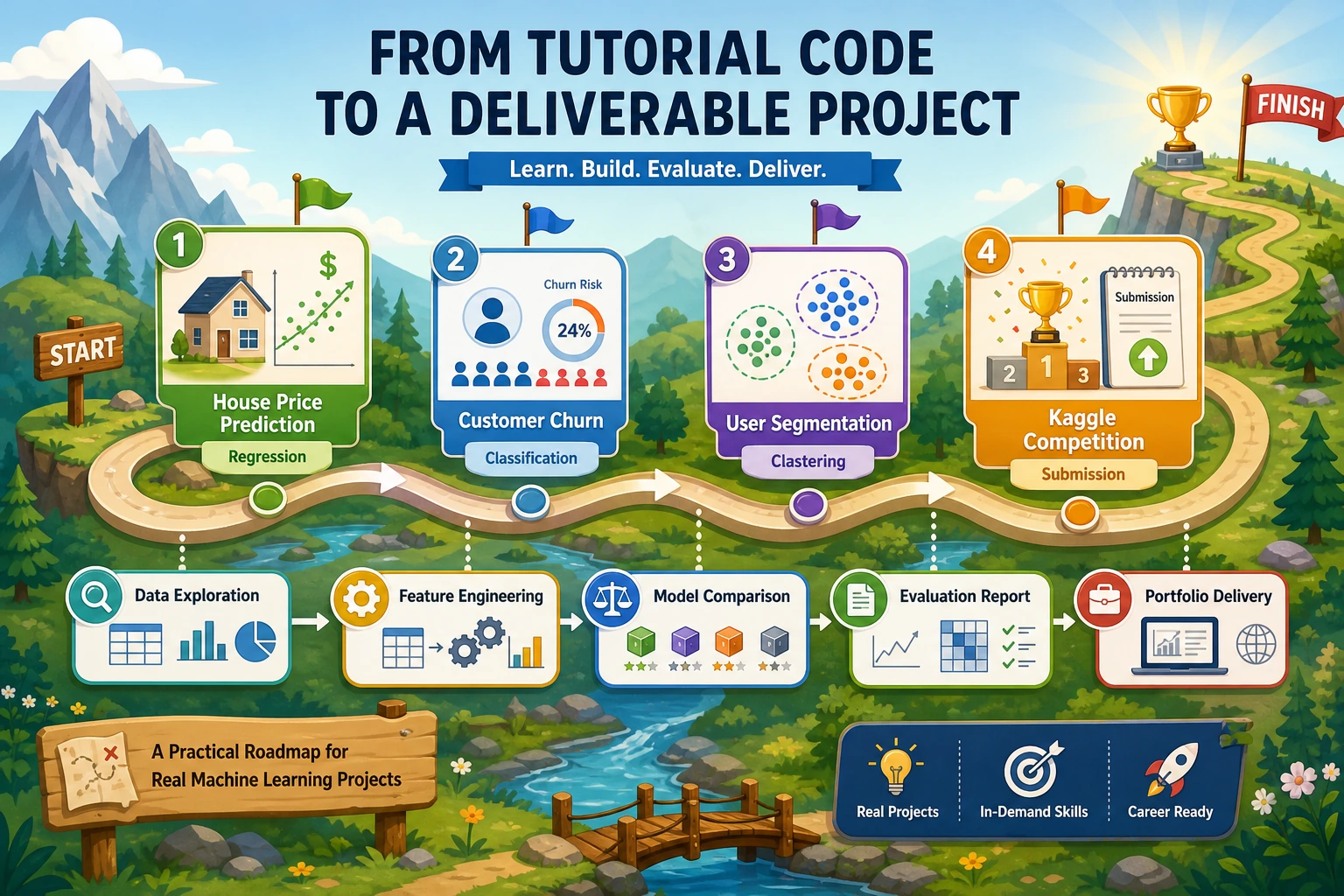
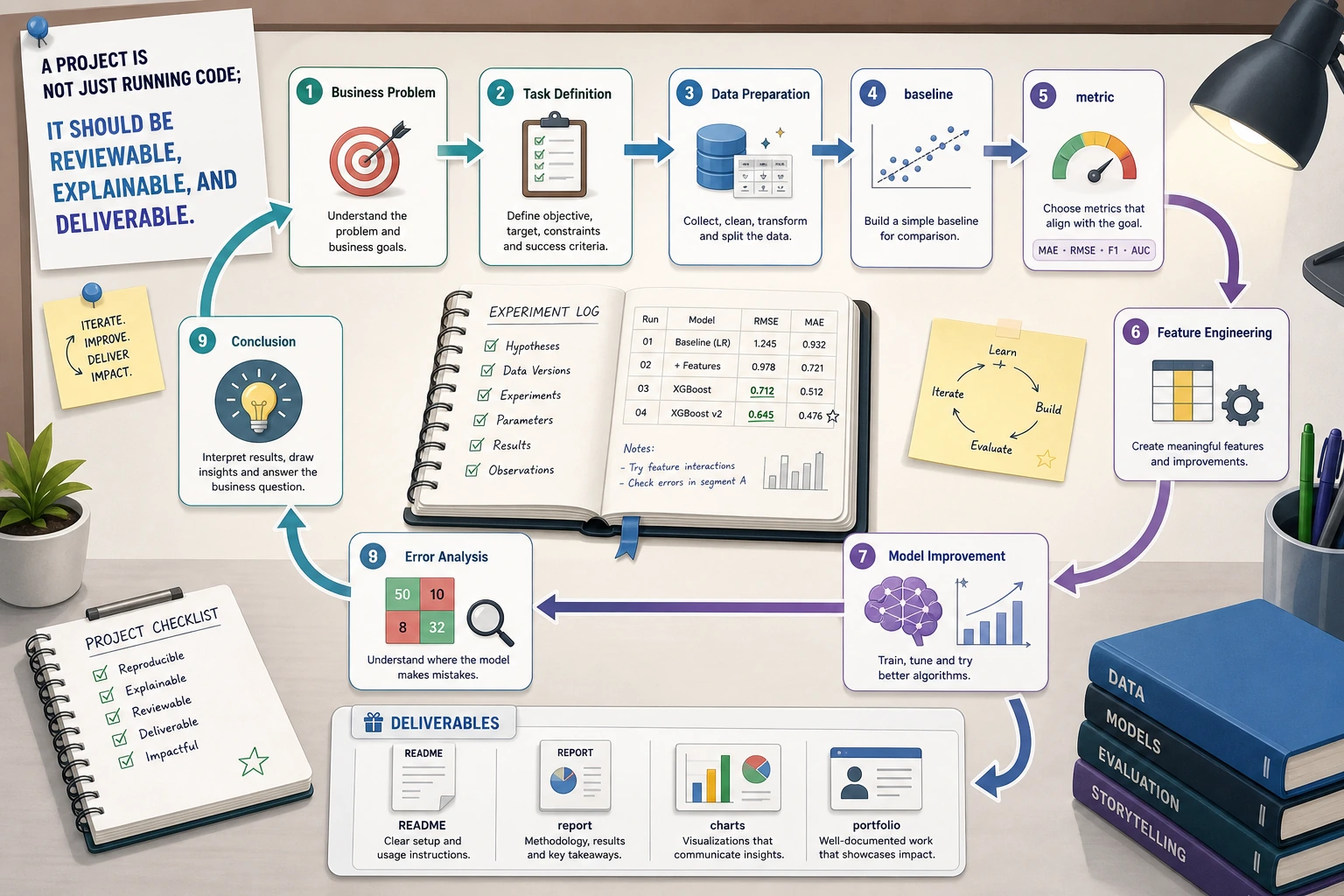
Keep this project loop:
problem -> data -> baseline -> metric -> improvement -> failure cases -> report
Do not jump straight to a complex model. A project without a baseline, metric, and failure analysis is only a demo run.
Keep One Experiment Log
Create ml_project_log_first_loop.py. This is not a model; it is the habit every model project needs.
experiments = [
    {"version": "v1_baseline", "metric": 0.72, "change": "default model"},
    {"version": "v2_features", "metric": 0.78, "change": "add ratio features"},
    {"version": "v3_tuned", "metric": 0.80, "change": "tune max_depth"},
]

best = max(experiments, key=lambda row: row["metric"])

print("best_version:", best["version"])
print("best_metric:", best["metric"])
print("next_step: inspect failure cases before adding more models")
Expected output:
best_version: v3_tuned
best_metric: 0.8
next_step: inspect failure cases before adding more models
This is the mindset shift: from "I ran a model" to "I can compare versions and explain the next step."
Learn in This Order
| Order | Read | What to deliver |
|---|---|---|
| 1 | 5.6.2 House Price Prediction | regression baseline and improvement |
| 2 | 5.6.3 Customer Churn Prediction | classification metric and threshold thinking |
| 3 | 5.6.4 User Segmentation | cluster interpretation and business labels |
| 4 | 5.6.5 Kaggle Practice | real submission workflow |
| 5 | 5.6.6 Hands-on ML Workshop | one complete evidence pack rehearsal |
The workshop comes last because it packages the project habits into one reproducible evidence pack.
Project Deliverable Standards
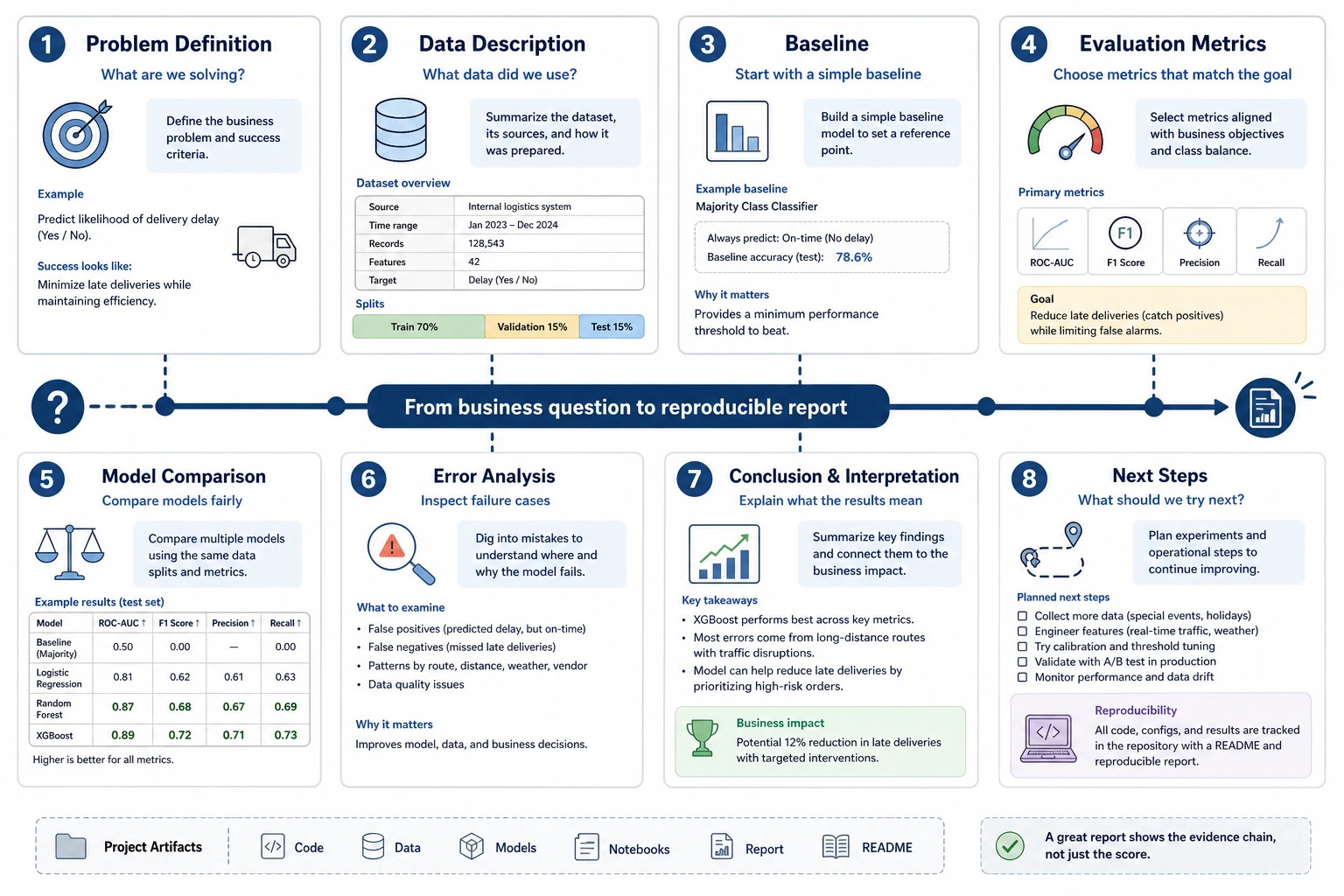
Keep these files for at least one project: README.md, run command, metric table, experiment log, one failure case, one chart, and a next-step plan.
Pass Check
You pass this roadmap when you can clearly say: how I defined the task, what baseline I used, which metric I trusted, what improved, where the model failed, and what I would do next.