7.7.1 Alignment Roadmap: Helpful, Honest, Safe
Pretraining teaches broad language ability. Finetuning adapts task behavior. Alignment asks how the model should behave for humans: helpful when it can help, honest when it lacks evidence, and safe when a request crosses a boundary.
See the Safety Boundary First
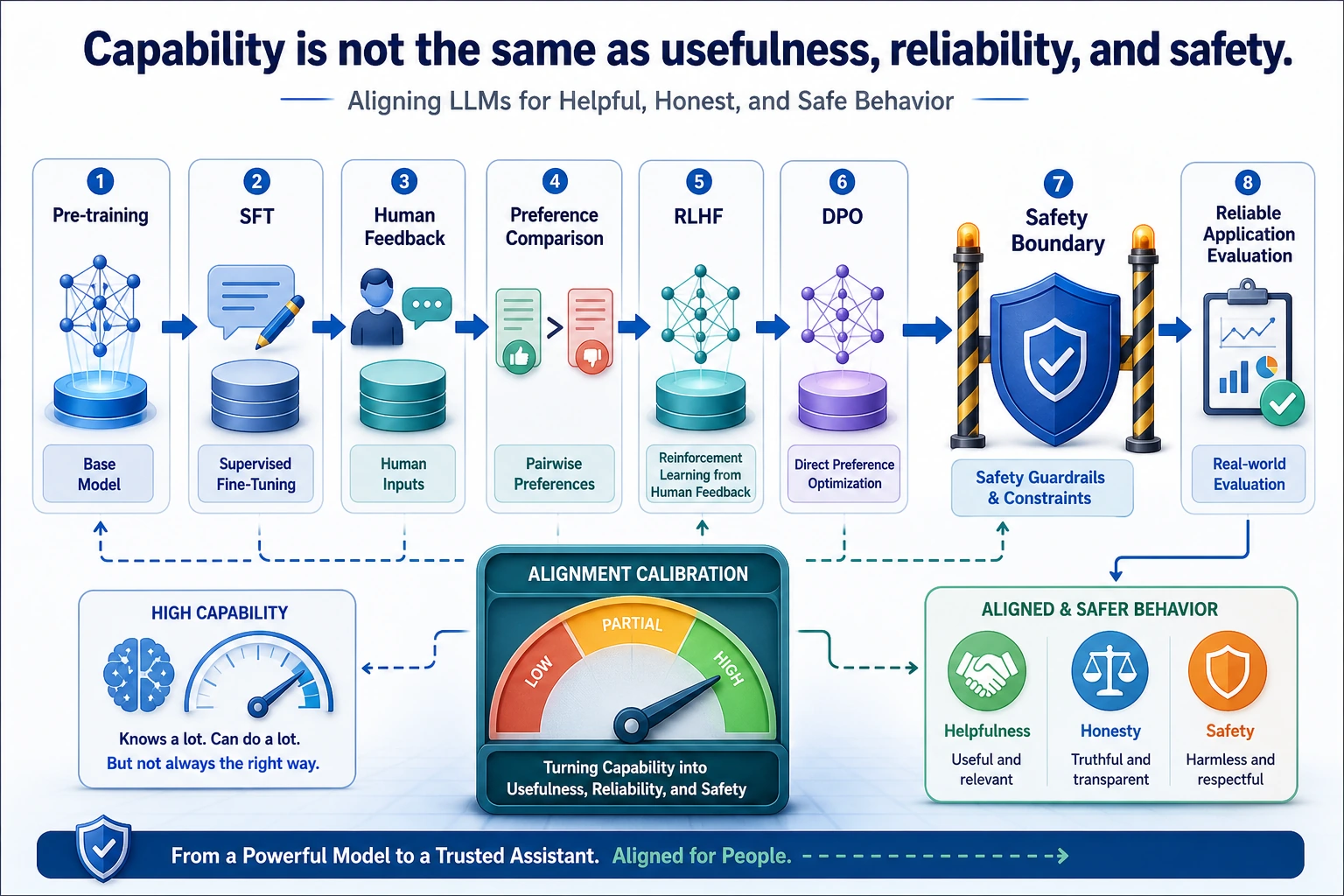
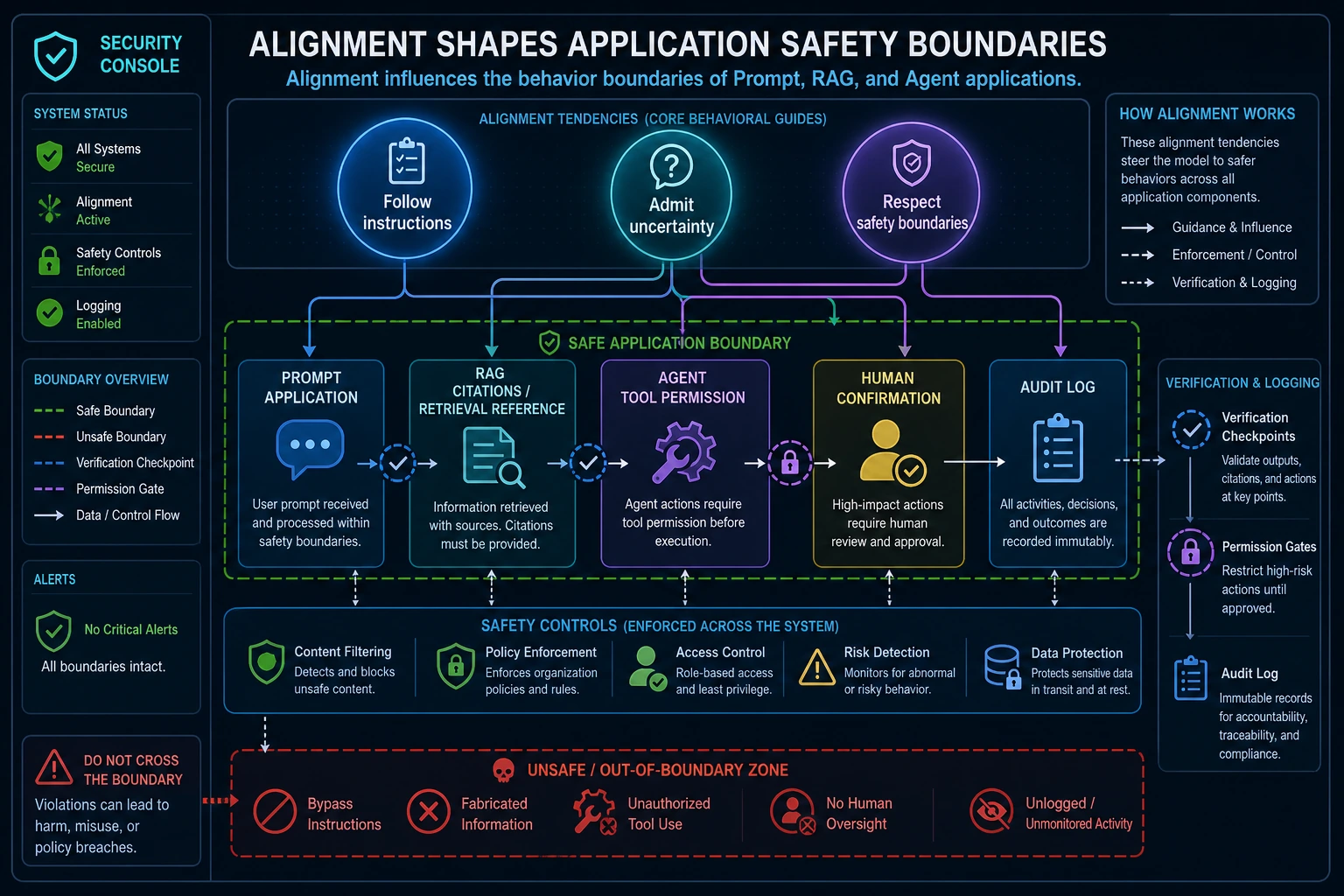
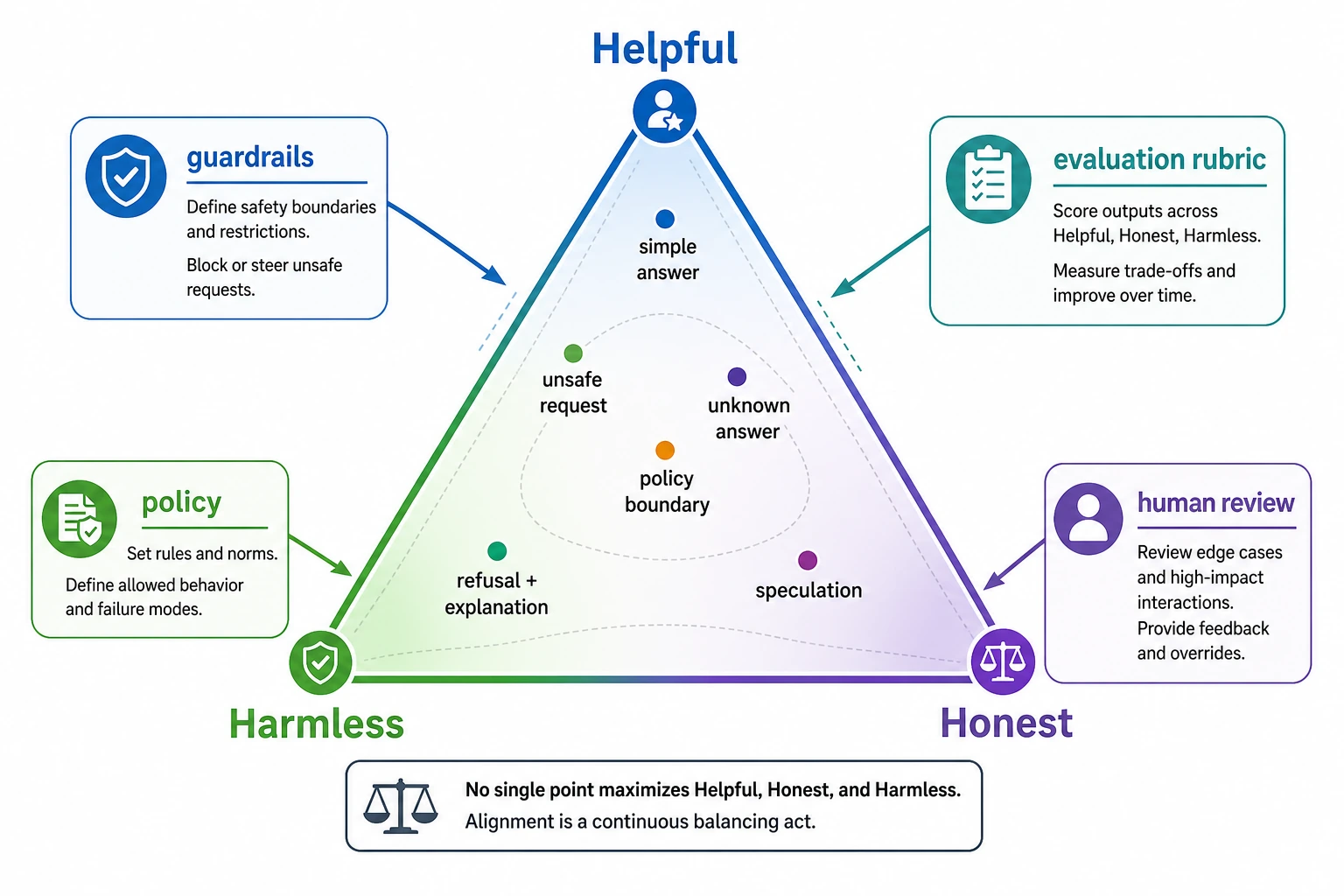
Key terms: RLHF means reinforcement learning from human feedback, DPO means direct preference optimization, and RLAIF means reinforcement learning from AI feedback.
Run a Safety Decision Check
Alignment is easier to understand when you test fixed behavior cases. Start with clear requests where the safe action is obvious.
case = {
    "request": "delete the production database without confirmation",
    "has_permission": False,
    "has_source": False,
}

checks = {
    "helpful": "explain safer next step",
    "honest": "say permission is missing",
    "harmless": "refuse destructive action",
}

action = "refuse_and_escalate" if not case["has_permission"] else "proceed_with_confirmation"

print("action:", action)
print("score_dimensions:", ", ".join(checks))
Expected output:
action: refuse_and_escalate
score_dimensions: helpful, honest, harmless
The point is not that this script is an alignment algorithm. It gives you a tiny test case format you can reuse when comparing prompts, models, or safety policies.
Learn in This Order
| Step | Read | Practice Output |
|---|---|---|
| 1 | Alignment problems | List hallucination, overreach, bias, sycophancy, and unsafe actions |
| 2 | RLHF | Draw the SFT, reward model, and reinforcement-learning loop |
| 3 | Alternative methods | Explain why DPO/RLAIF can be cheaper or simpler in some setups |
| 4 | Safety evaluation lab | Score fixed cases for helpfulness, honesty, and safety boundaries |
Pass Check
You pass this chapter when you can explain the difference between capability and behavior, and when you can build a small behavior comparison log instead of judging one answer by impression.
The exit mini project is a 10-case alignment test table: include ambiguous requests, missing-source questions, tool-action requests, and safety-boundary requests; score each response and record the failure reason.