7.5.1 Prompt Engineering Roadmap: Brief, Output, Evaluation
Prompt engineering is the interface between your application and the model. The goal is not to write a clever sentence; the goal is to make one model call predictable, parseable, testable, and easy to improve.
See the Prompt Loop First
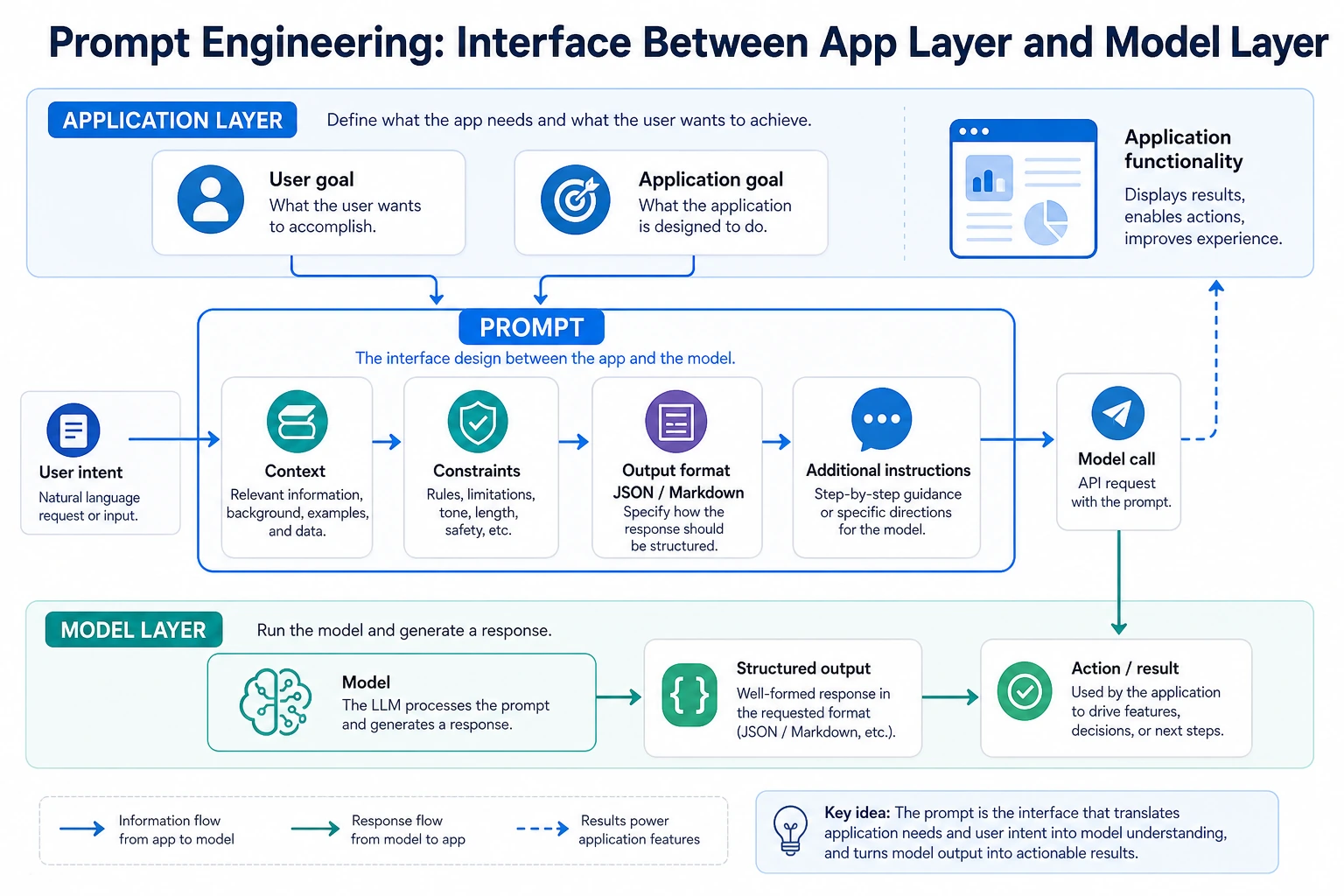
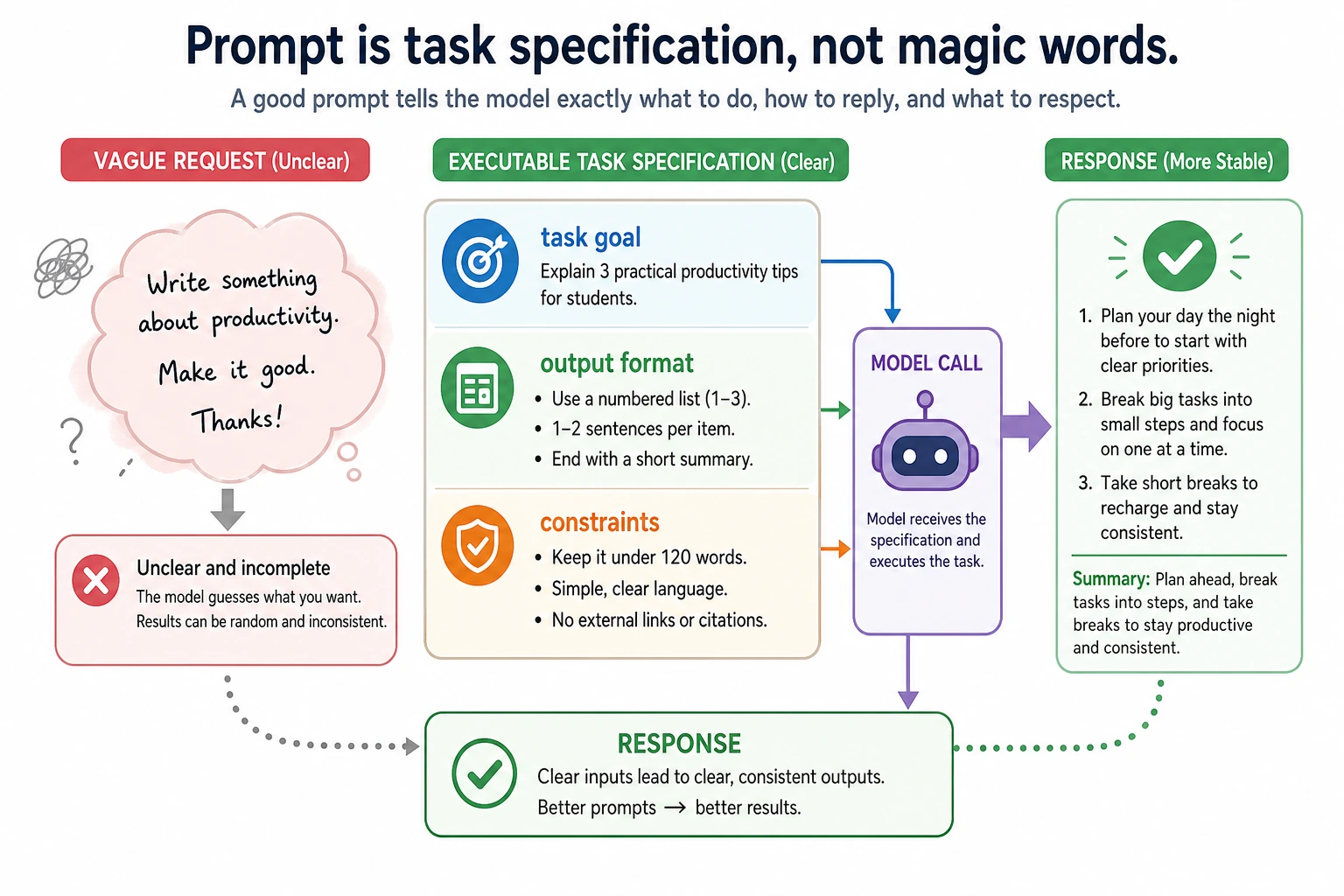
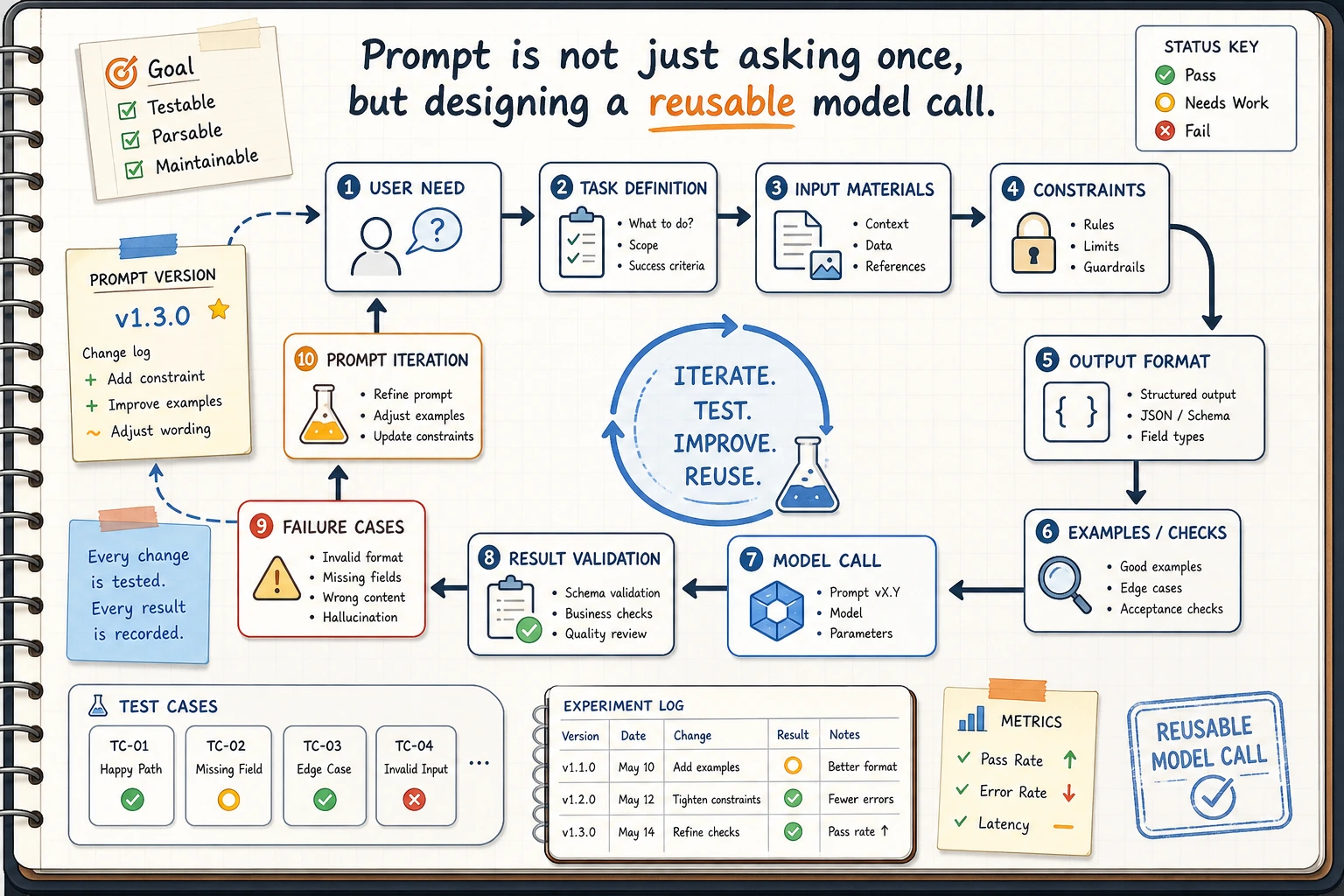
Use this chapter when the model already has the general ability, but the result is vague, unstable, in the wrong format, or hard to evaluate.
Run a Prompt Contract Check
Before calling any LLM, describe the prompt as a contract: task, context, output format, and constraints. This tiny script checks whether the contract is complete enough to test.
prompt_contract = {
    "task": "Extract chapter metadata",
    "context": "One course markdown file",
    "output_format": ["chapter", "goals", "prerequisites", "risks"],
    "constraints": ["return JSON only", "mark missing facts as null"],
}

required = ["task", "context", "output_format", "constraints"]
missing = [field for field in required if not prompt_contract.get(field)]

print("ready:", not missing)
print("fields:", ", ".join(required))
print("test_case_count:", 3)
Expected output:
ready: True
fields: task, context, output_format, constraints
test_case_count: 3
If ready is False, fix the prompt brief before you try more examples. A vague prompt produces vague debugging.
Learn in This Order
| Step | Read | Practice Output |
|---|---|---|
| 1 | Prompt basics | Rewrite one vague request into task, context, format, constraints |
| 2 | Advanced prompting | Add examples, steps, role, and boundary notes only when they help |
| 3 | Structured output | Make JSON, table, or Markdown output that another program can parse |
| 4 | Prompt practice | Compare prompt versions on the same fixed inputs |
| 5 | Evaluation lab | Record pass rate, failure type, and the next prompt change |
Pass Check
You pass this chapter when you can keep the input set fixed, change one prompt layer at a time, and explain why the new version is better with evidence instead of a feeling.
The exit mini project is a course-content extraction prompt: input one course document, output chapter topic, learning goals, prerequisites, key terms, practice suggestions, and risk notes as JSON or a Markdown table.