11.1.1 Text Basics Roadmap: Tokens, Cleaning, Representation
Text is not naturally computable. Before classification, extraction, summarization, or QA, you need to turn raw text into stable units and features.
See the Text Pipeline First
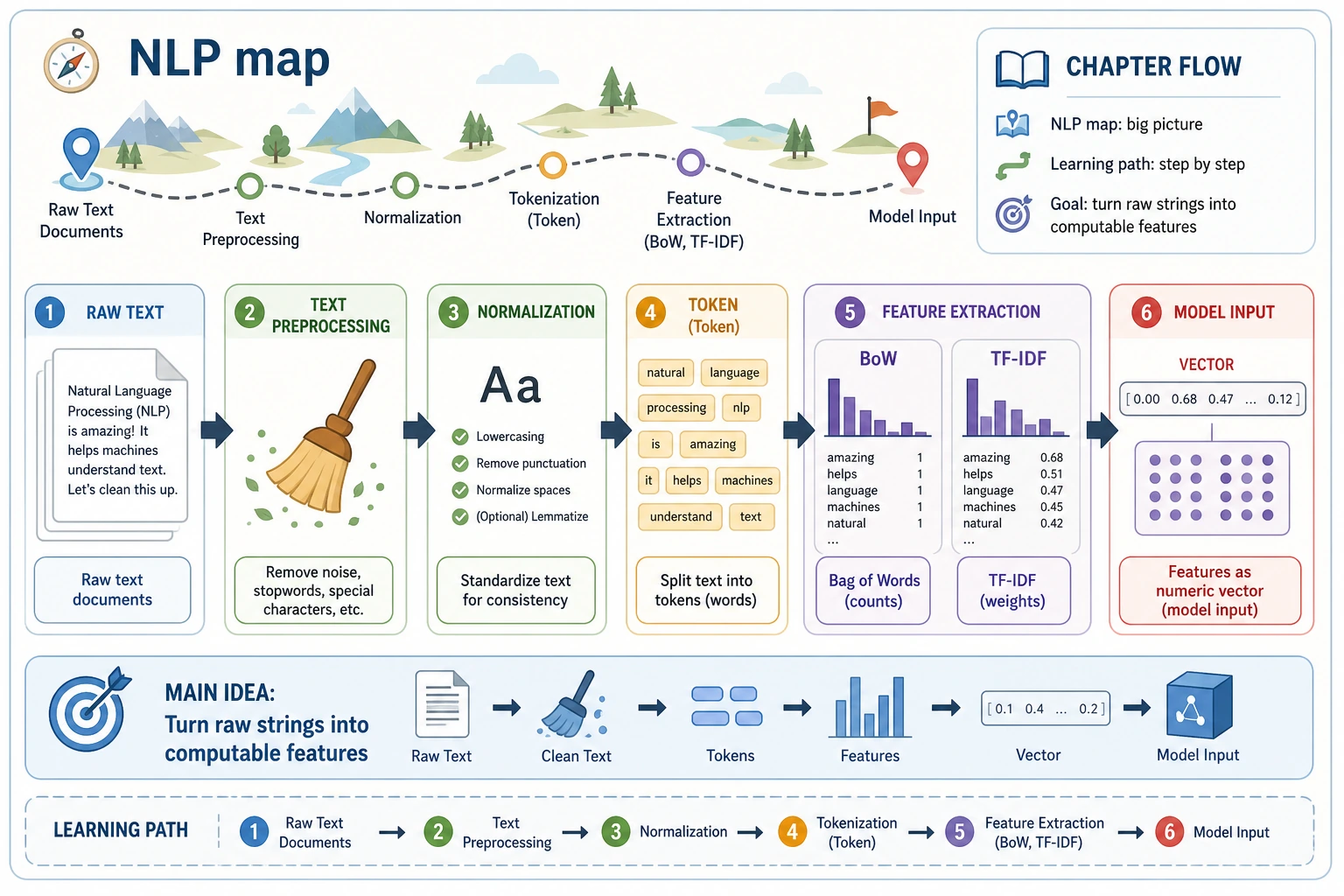
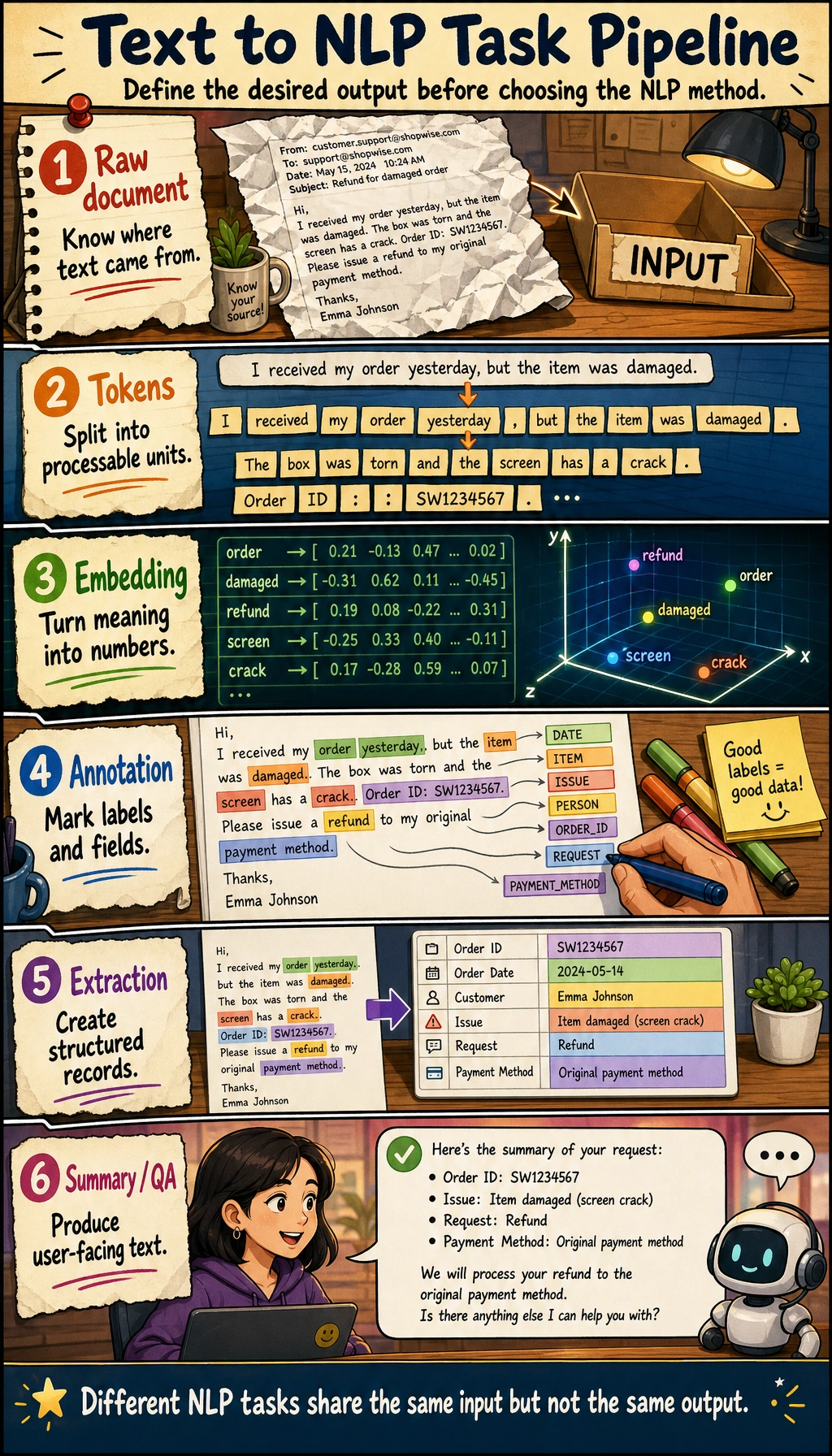
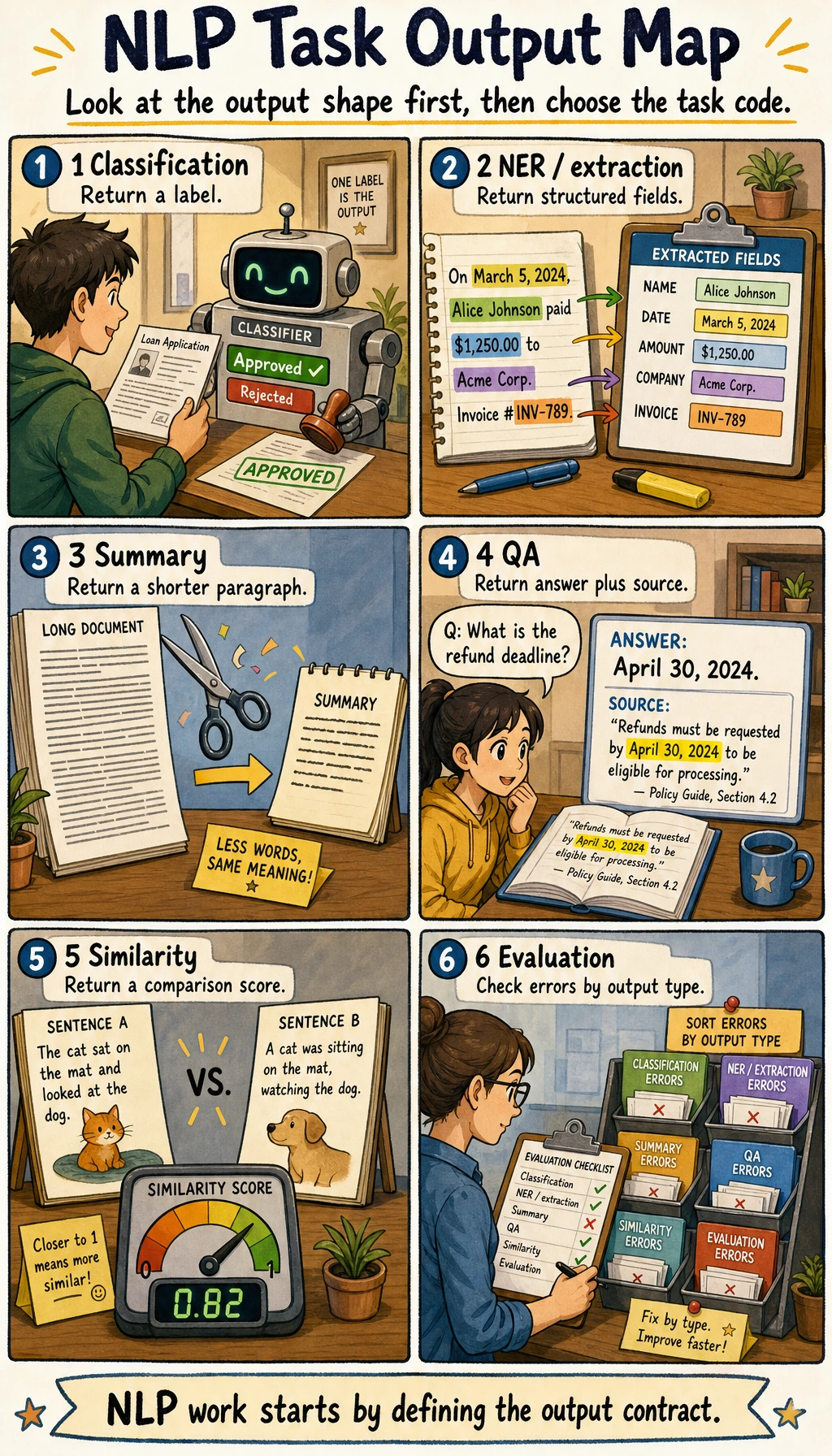
The first habit is to ask: what is the input text, what is the task, and what output shape should the system produce?
Run a Token and Vocabulary Check
text = "RAG answers need citations"
tokens = text.lower().split()
vocab = {token: index for index, token in enumerate(sorted(set(tokens)))}
ids = [vocab[token] for token in tokens]

print("tokens:", tokens)
print("ids:", ids)
print("vocab_size:", len(vocab))
Expected output:
tokens: ['rag', 'answers', 'need', 'citations']
ids: [3, 0, 2, 1]
vocab_size: 4
If tokenization is unstable, every downstream task becomes unstable too.
Learn in This Order
| Step | Read | Practice Output |
|---|---|---|
| 1 | NLP task map | Match classification, labeling, extraction, QA, summarization |
| 2 | Preprocessing | Normalize text, split tokens, handle noise and boundaries |
| 3 | Text representation | Build tokens, ids, vocabulary, sparse features, or vectors |
Pass Check
You pass this chapter when you can take raw text, tokenize it, explain the task output shape, and save one preprocessing example in your project notes.