9.9.1 Deployment Roadmap: Runtime, Persistence, Recovery
Deploying an Agent means more than putting code on a server. You need model calls, tool services, queues, state storage, traces, permissions, cost limits, and rollback paths.
See the Runtime Loop First
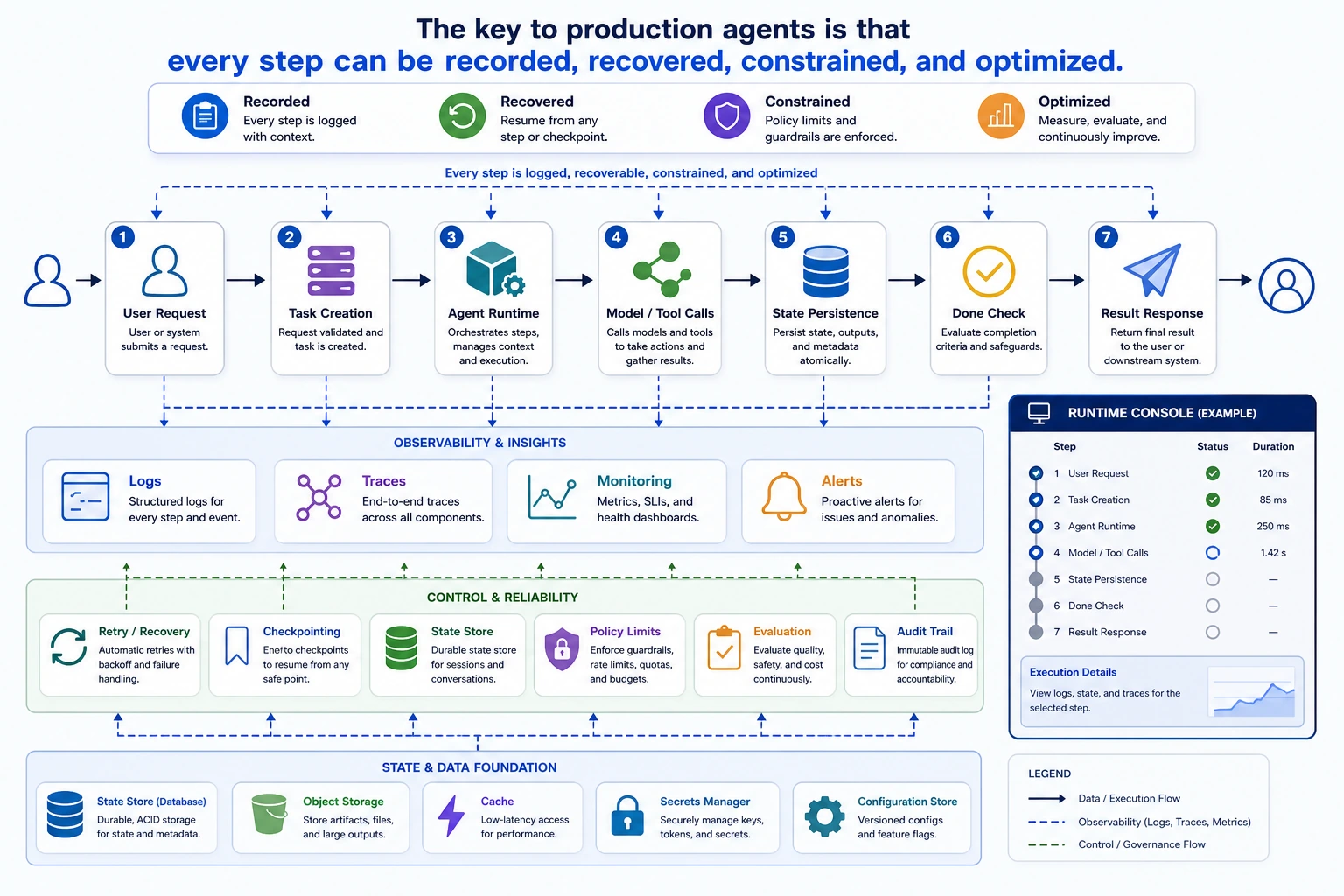
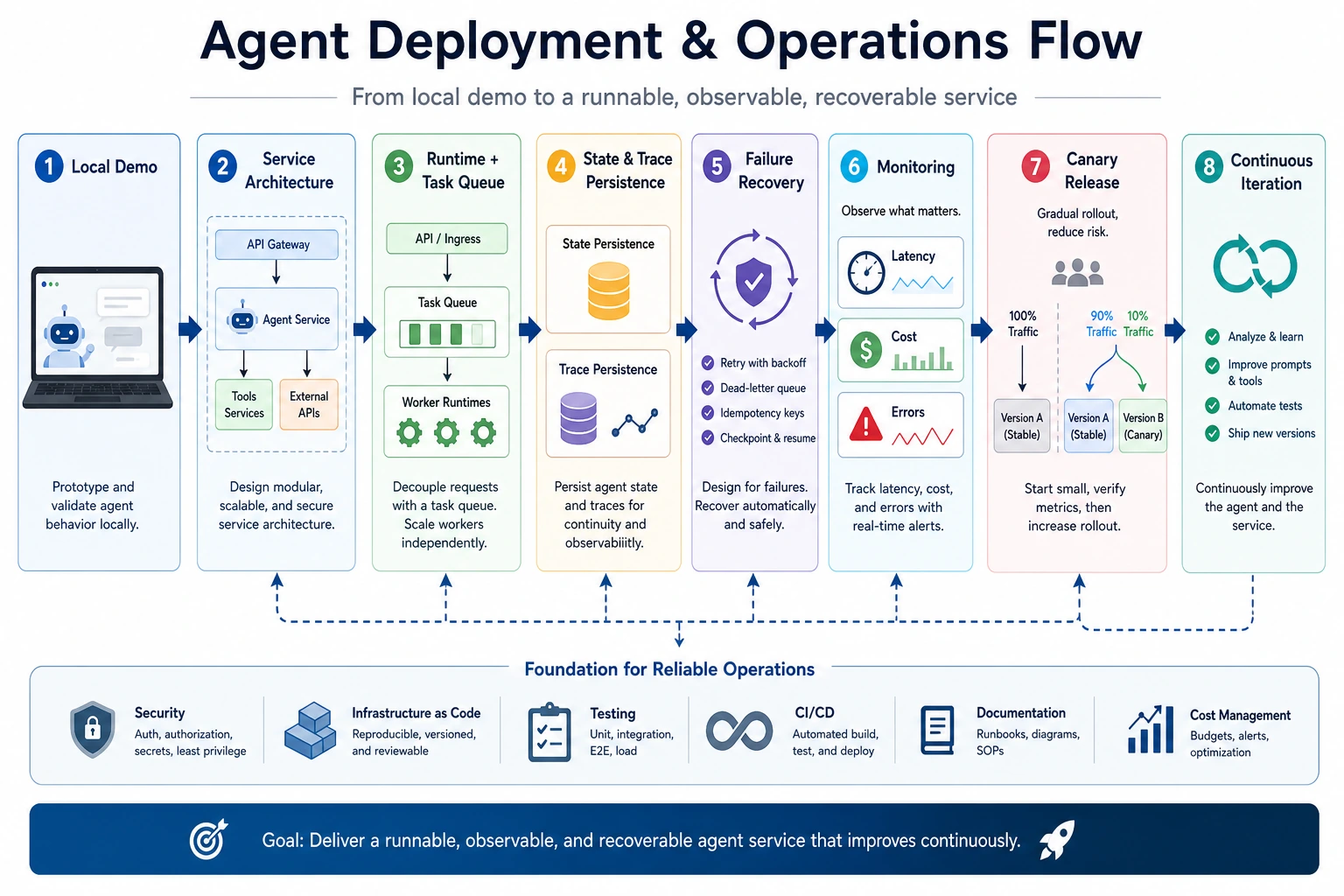
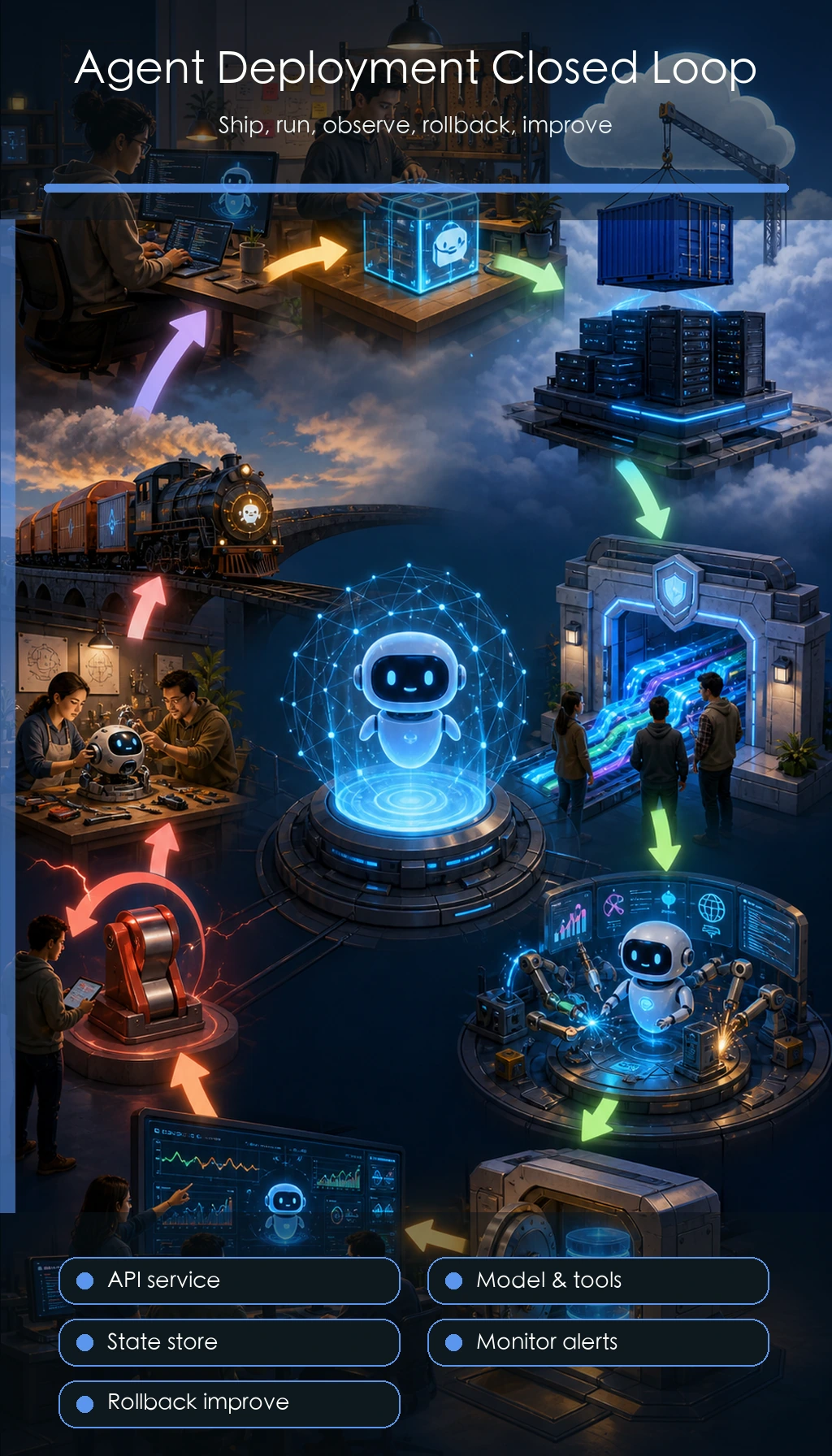
The production question is not “did it work once?” It is “can it keep working, fail safely, and recover?”
Run a Deployment Readiness Check
This check highlights missing production basics.
service = {
    "api_entry": True,
    "state_store": True,
    "trace_log": True,
    "cost_limit": True,
    "rollback": False,
}

missing = [name for name, ok in service.items() if not ok]

print("ready:", not missing)
print("missing:", missing)
Expected output:
ready: False
missing: ['rollback']
If the system cannot roll back or recover, do not call it production-ready.
Learn in This Order
| Step | Read | Practice Output |
|---|---|---|
| 1 | Deployment architecture | Draw frontend, backend, model service, tool service, storage |
| 2 | Runtime management | Handle sync, async, long-running tasks, queues, interruption |
| 3 | Persistence and recovery | Save task state, memory, traces, intermediate results |
| 4 | Cost optimization | Track model calls, tool calls, caching, batching, routing |
| 5 | Production practices | Add monitoring, alerts, canary release, rollback, permissions |
Pass Check
You pass this chapter when a local Agent demo becomes a small service with API entry, state persistence, trace logs, error responses, cost records, and deployment instructions.