
10.1.1 Vision Basics Roadmap: Pixels, Channels, Processing
Computer vision starts with input intuition. Before classification, detection, or segmentation, you need to know what an image looks like as numbers.
See the Image Pipeline First
Section titled “See the Image Pipeline First”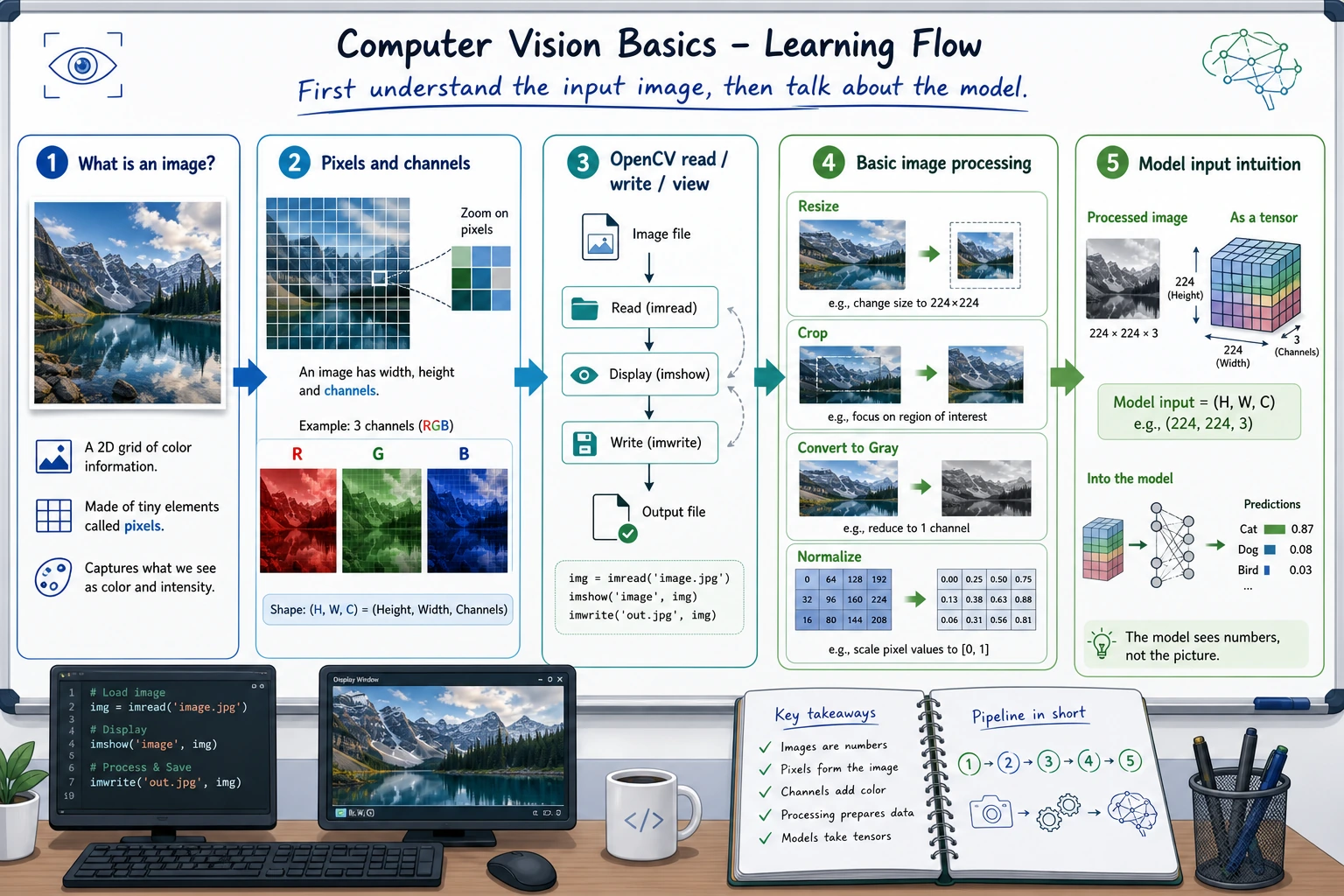
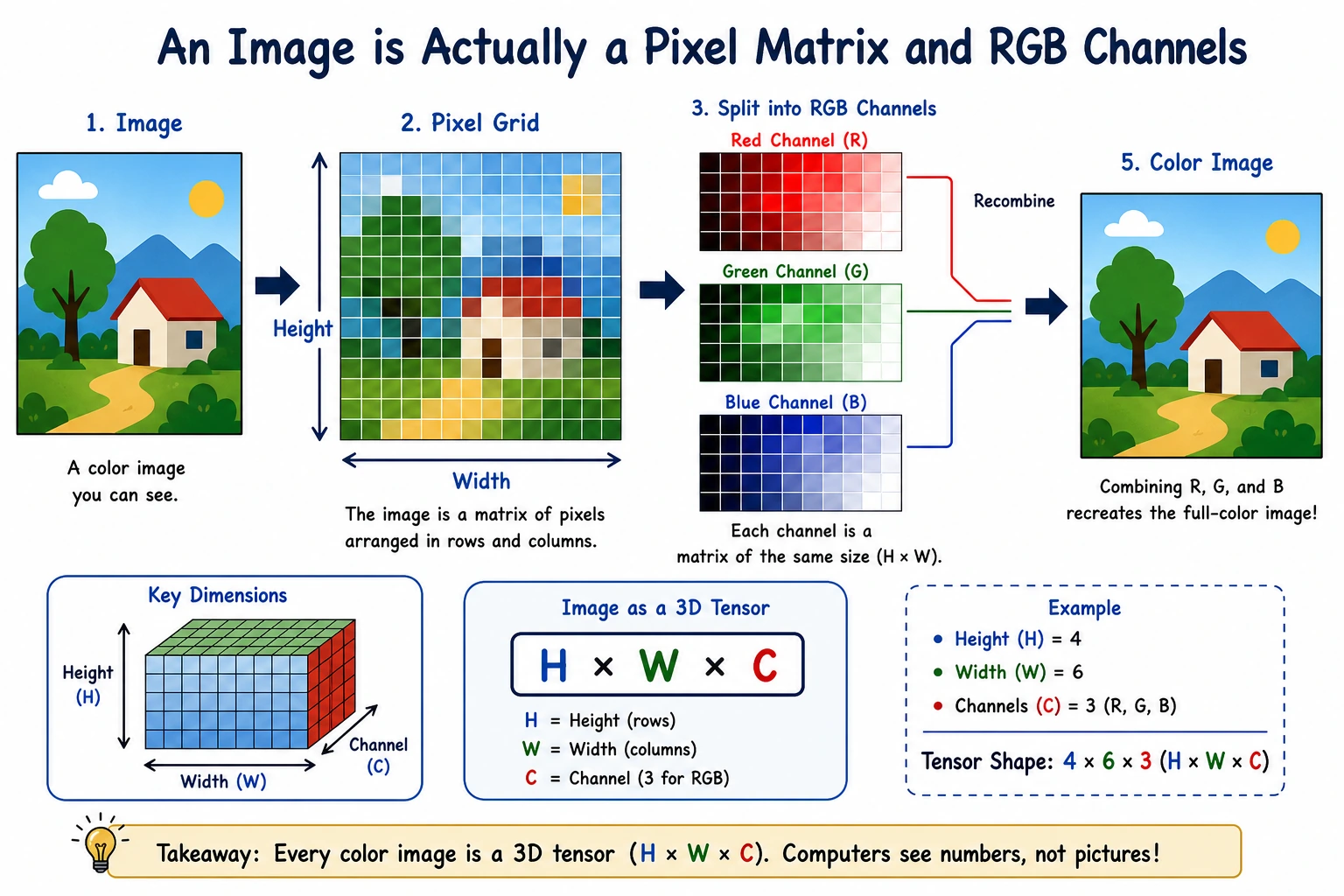
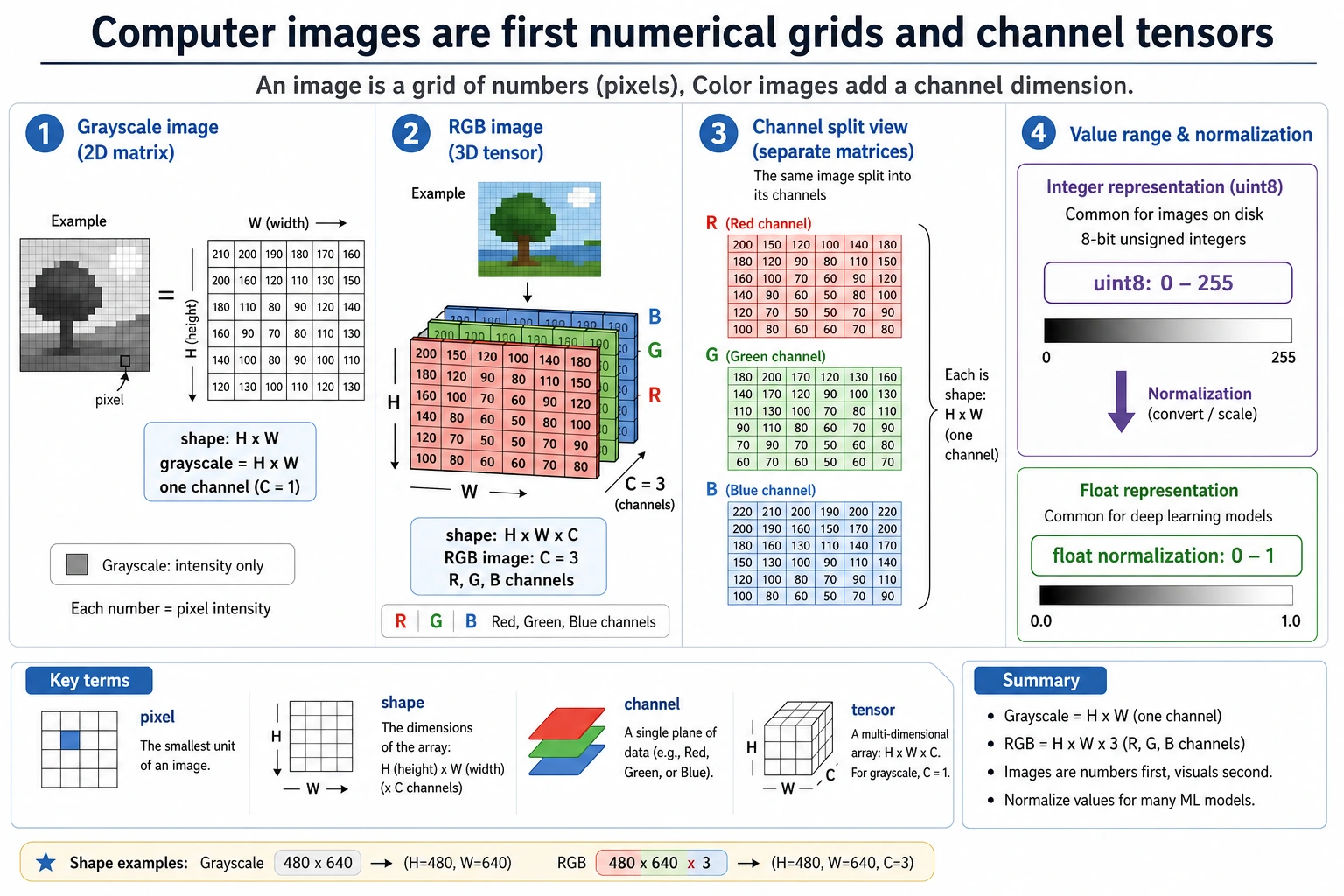
The first mental model is simple: image = height × width × channels. Most later bugs come from shape, channel order, coordinates, or color-space confusion.
Run a Tiny Image Shape Check
Section titled “Run a Tiny Image Shape Check”This toy image has 2 rows, 3 columns, and RGB values.
image = [    [[255, 0, 0], [0, 255, 0], [0, 0, 255]],    [[255, 255, 255], [0, 0, 0], [128, 128, 128]],]
height = len(image)width = len(image[0])channels = len(image[0][0])top_left_pixel = image[0][0]
print("shape:", (height, width, channels))print("top_left_pixel:", top_left_pixel)
Expected output:
shape: (2, 3, 3)top_left_pixel: [255, 0, 0]If your code reads a real image with the wrong shape or channel order, every later model result becomes harder to trust.
Learn in This Order
Section titled “Learn in This Order”| Step | Read | Practice Output |
|---|---|---|
| 1 | Image representation | Explain pixel, channel, height, width, RGB/BGR |
| 2 | OpenCV basics | Load, view, crop, resize, and save an image |
| 3 | Basic processing | Try grayscale, threshold, blur, edge, and simple filters |
Evidence to Keep
Section titled “Evidence to Keep”Keep this page’s proof of learning as a small evidence card:
- Input Image
- source image or synthetic image used in the run
- Array Shape
- width, height, channels, dtype, and coordinate convention
- Processed Output
- grayscale, crop, edge, threshold, or saved intermediate image
- Failure Check
- channel order, resize distortion, coordinate mistake, or over-processing
- Expected Output
- before/after image plus the printed shape or pixel values
Pass Check
Section titled “Pass Check”You pass this chapter when you can inspect an image shape, crop a region by coordinates, explain channel order, and save one processed result for your README.
Check reasoning and explanation
- A passing answer maps the task to the right visual output: class label, bounding box, mask, OCR text, embedding, or video event.
- The evidence should include a rendered visual artifact and one metric or qualitative error note.
- A good self-check names one visual failure mode such as class confusion, missed objects, bad masks, lighting shift, domain shift, or weak annotation quality.